 midas media.
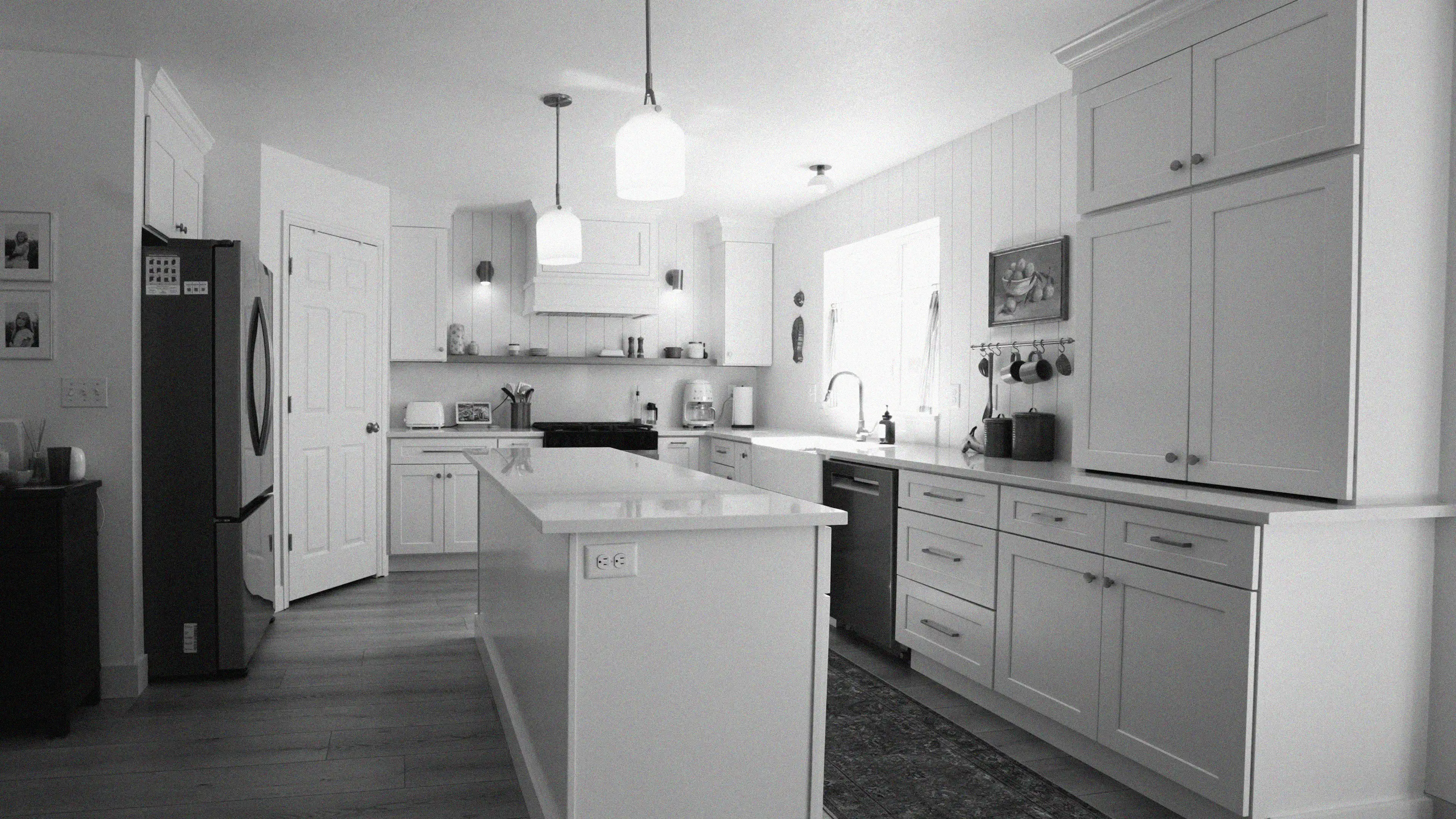
Midas Media, a contractor marketing agency in Lehi, Utah, managed $80,565.65 in Meta ad spend for a custom cabinet and kitchen remodeling contractor on the Wasatch Front over 19 months. The campaigns produced 1,875 leads, 80 closed jobs, and $1,619,238.01 in closed revenue, a 20.1x return on ad spend.
The first thing we did for this client was delete their "Free Estimate" form.
If you run a custom cabinet or kitchen remodeling business, you already know the biggest headache in marketing: wasting time on tire-kickers. You run ads, get an influx of inquiries, and spend 15 to 20 hours a week driving across town to measure kitchens, only to find out the homeowner has a $4,000 budget for a $25,000 custom job.
Most agencies will tell you to spend more on ads. But scaling bad leads just burns fuel and exhausts your estimators. What moves the number is better leads for contractors, not more of them. Over 19 months we built a system designed to filter out cheap leads before anyone gets in a truck. Here is what we changed and what it produced.
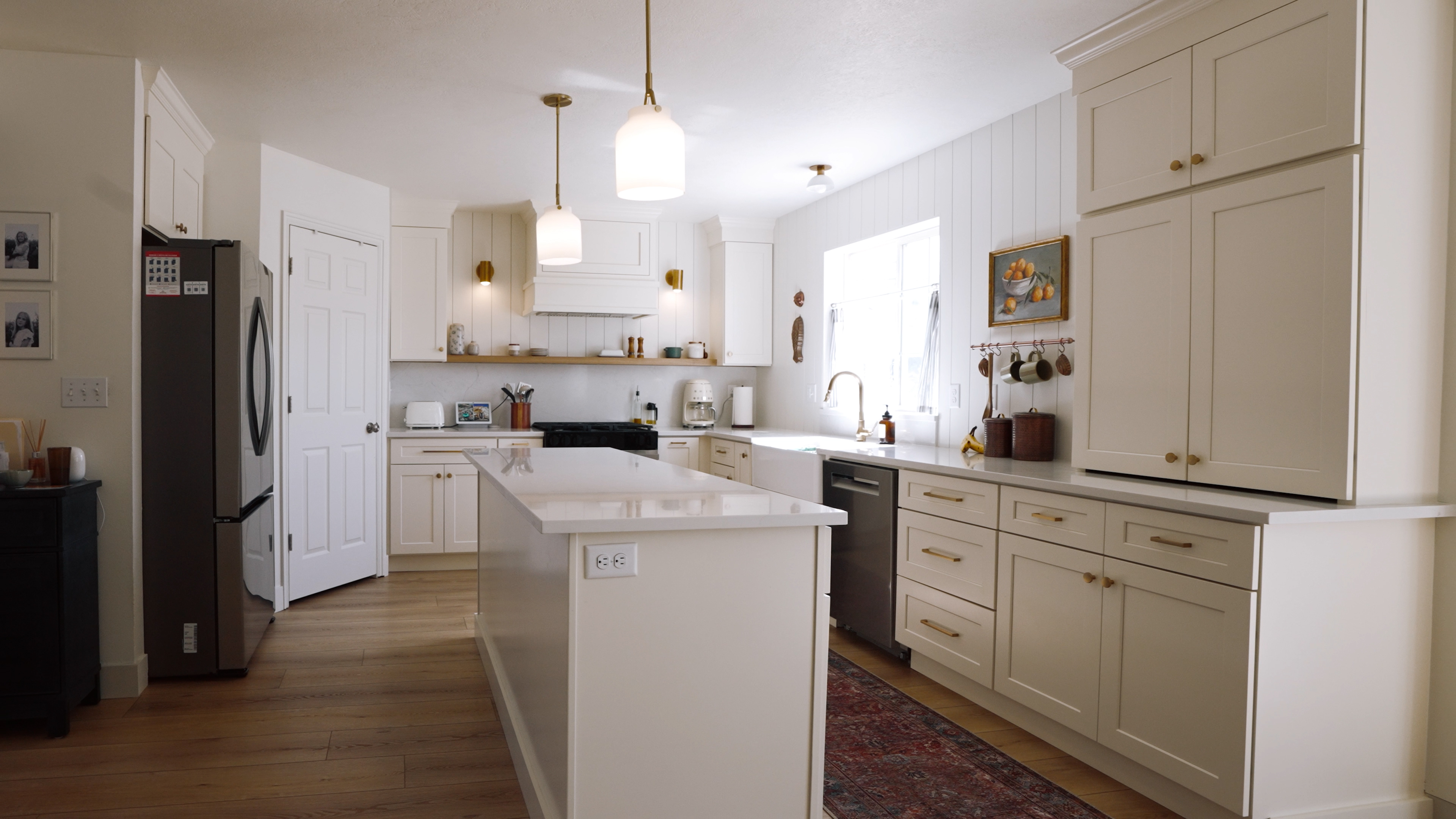
Campaign performance at a glance
Instead of focusing on raw lead volume, we tracked the metrics that actually matter to a cabinet maker: qualified appointments and signed contracts.
| Metric | Result |
|---|---|
| Total ad spend | $80,565.65 |
| Total leads generated | 1,875 |
| Blended cost per lead | $42.97 |
| Lead-to-estimate rate | 25% |
| In-home estimates conducted | ~469 |
| Cost per in-home estimate | $171.78 |
| Closed jobs, 2025 | 42 |
| Closed jobs, 2026 | 38 |
| Closed jobs, 19-month total | 80 |
| Average contract value, 2025 | $21,045.52 |
| Average contract value, 2026 | $19,350.69 |
| Average contract value, 19-month | $20,240.48 |
| Closed revenue, 2025 | $883,911.64 |
| Closed revenue, 2026 | $735,326.37 |
| Total closed revenue | $1,619,238.01 |
| Return on ad spend | 20.1x |
| Jobs that expanded past cabinets | 60% |
How these numbers were tracked: Revenue is attributed in the client's CRM, not in Meta Ads Manager. A dollar only counts here once a signed contract is logged against that specific lead record. Return on ad spend is calculated on advertising cost only, so it is not a net profit figure.
The problem: why generic ads fail cabinet contractors
Standard agency campaigns use a basic 2-field form (name and phone) on Facebook. Because there is zero barrier to entry, homeowners click it passively without thinking about money. For a custom cabinet contractor, that creates three problems:
- Sticker shock. Homeowners price-anchor on big-box retail, then hear a number two to five times higher.
- Estimators burn hours driving to homes that were never going to spend $20,000. That is the expensive one, because the time does not come back.
- Close rates fall, and it looks like a sales problem. Usually it is not. When someone expecting $5,000 hears $20,000, the estimator did not lose that job. It was lost three weeks earlier, when an ad let an unqualified homeowner book an appointment.
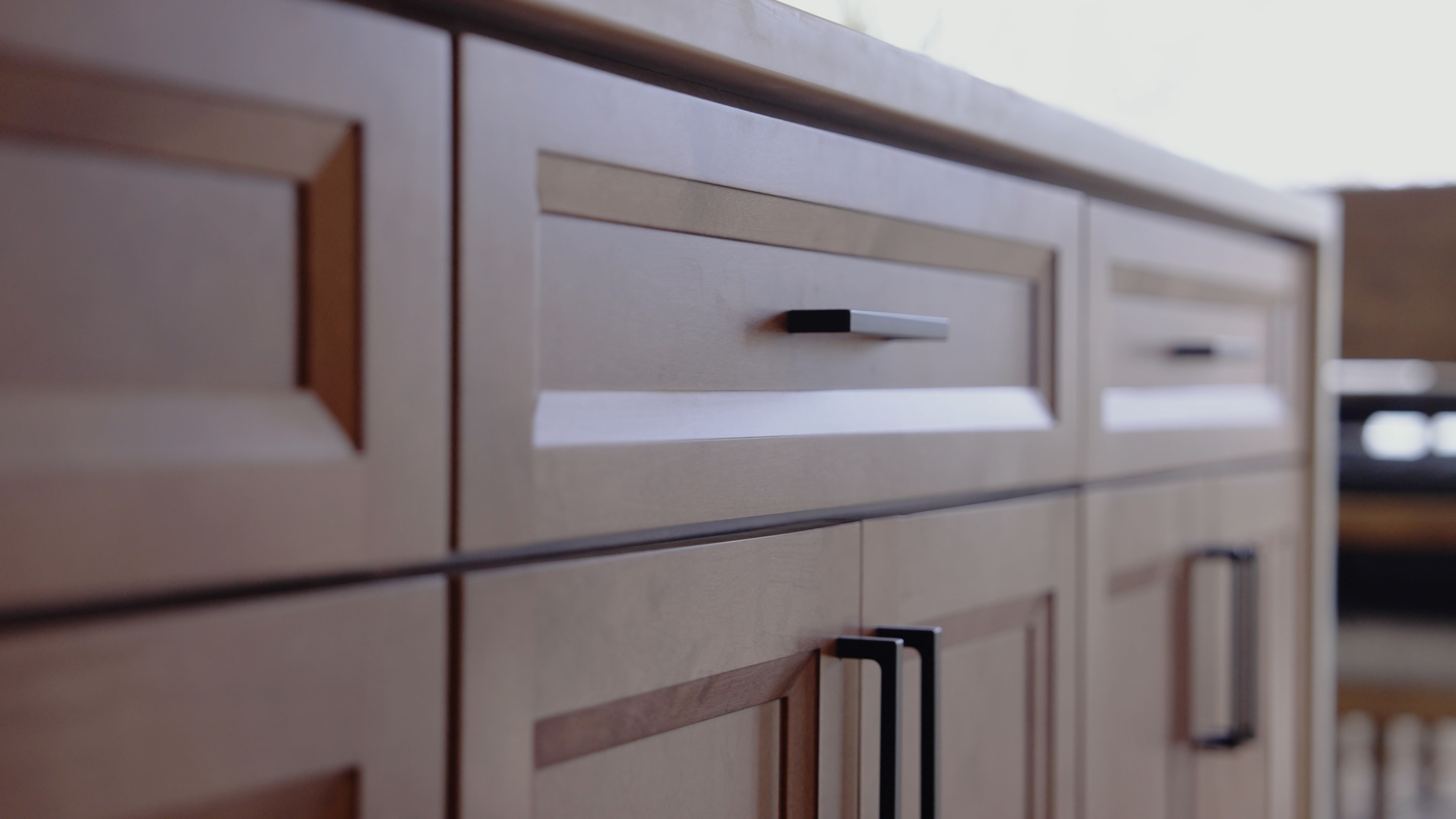
To scale efficiently, we needed a system that filtered out low-budget projects before our client ever rolled a truck.
The fix: a cost quiz that filters out cheap leads
We replaced the generic lead form with an interactive kitchen cost quiz. It became the core engine of the client's business, taking $72,799 of the total ad spend and generating 1,622 qualified leads.
The important part is what the quiz does not ask. It never says "what's your budget?" That question kills conversions. It feels invasive, it shows up before you have earned the right to ask it, and it is where homeowners abandon the form.
So we qualify sideways. Instead of asking for contact info right away, the ad invites the homeowner to answer a short set of project questions that tell us what we need to know without putting a price on the screen:
- What is the square footage of the home?
- Is this a remodel or a repair?
- What is the timeline for the project?
- How are you planning to pay for it?
Why this works: every one of those answers is a budget signal in disguise. Square footage and project type establish the scale of the job. Timeline separates real buyers from people still daydreaming. And how someone plans to pay, whether cash, financing, or insurance, tells you more about what they can actually spend than a self-reported budget number ever will.
Getting to this exact set took work. We have run a lot of variations, different questions, different orders, different phrasings, and measured which combinations produced completed quizzes that turned into booked estimates rather than just completed quizzes. What runs today is the version that won.
Low-budget homeowners filter themselves out, and the estimator gets a pre-qualified prospect. Across the 19 months, 25% of all incoming leads converted into in-home estimate appointments, roughly 469 of them, at $171.78 in ad cost each. Against a $20,240 average contract, that leaves a wide margin.
Why we trashed the Free Estimate form
We did not just assume the old model was worse. We ran it as a control against the quiz, same market, same audience, same estimating team.
The generic "Free Estimate" form produced 25 leads on $1,567 in spend. That works out to $62.69 per lead against the quiz's $44.88, and every one of those leads arrived with no budget signal, no timeline, and no indication of how the homeowner intended to pay. More expensive, and less useful once it landed. That is why we trashed it.
What a kitchen remodel lead should actually cost
Contractors ask us this constantly, and almost nobody publishes a straight answer. So here is ours.
A qualified kitchen remodel lead on Meta should cost between $40 and $80. This campaign came in at a $42.97 blended cost per lead across 1,875 leads over 19 months. If you are paying materially more than $80 for a lead that has not been budget-qualified, you are overpaying.
The comparison most cabinet and remodeling contractors care about is shared lead marketplaces like Angi, because that is what they are usually paying for today.
| Metric | This campaign (Meta) | Angi shared leads |
|---|---|---|
| Cost per lead | $42.97 | $50 to $120 |
| Contractors receiving each lead | 1 (exclusive) | 3 to 8 |
| Budget pre-qualified | Yes, via the quiz | No |
| Effective cost per exclusive opportunity Midas Media calculation | $42.97 | $150 to $960 |
The effective cost row is our own calculation, not a price Angi charges. When one homeowner request is sold to several contractors at once, you are paying full price for a fraction of a job, so the number that matters is what an opportunity costs when you have it to yourself.
Take the reading most favorable to Angi. The cheapest lead in the published range, shared with the fewest contractors, is $50 split three ways, or $150 per exclusive opportunity. Our $42.97 still comes in about 3.5x cheaper, and that is the floor of the comparison rather than the flattering version of it. At the other end of the published range, a $120 lead shared eight ways works out to $960.
Worth knowing alongside the pricing: in January 2023 the FTC ordered HomeAdvisor, an Angi Inc. company, to pay up to $7.2 million over deceptive claims about the quality and source of the leads it sold to contractors (FTC, January 2023). That order concerns lead quality claims rather than pricing, but it is the only primary source in this comparison.
Angi cost-per-lead and lead-distribution ranges above reflect figures published by contractor marketing sources (LeadTruffle, TheBookingFlow, ConstructionLeadPro). Angi does not publish official per-lead pricing or distribution counts.
Scaling past the quiz
The cost quiz built a predictable, profitable baseline. Once the client saw the return, they came back with a new question: they had extra marketing budget, and wanted to know where to put it.
For clients who want more volume than the quiz alone produces, we add secondary campaigns. These carry a separate deployment fee, and they work because they catch homeowners the quiz misses:
- The Pipeline Builder, $4,537 spend, 190 leads. A "Kitchen Design Wizard" campaign aimed at homeowners 3 to 6 months out from buying, so the client is in the conversation before competitors get a chance to bid.
- The Showcase, $1,661 spend, 38 leads. Retargeting that puts finished portfolio work in front of homeowners who took the quiz but never booked. Cheap leads, already warm.
Stacked together, the three campaigns returned 20.1x on $80,565.65 in spend and $1,619,238.01 in signed contracts.
Frequently asked questions
What is a good cost per lead for kitchen remodel ads?
A qualified kitchen remodel lead on Meta should cost between $40 and $80. This campaign averaged $42.97 across 1,875 leads over 19 months. The more useful planning number is cost per booked in-home estimate, which was $171.78 here, because that is what actually consumes your estimating capacity.
Are Angi leads worth it for kitchen remodelers?
Published figures put Angi shared leads at roughly $50 to $120, sold to 3 to 8 contractors at once. By our calculation, that makes an opportunity you have to yourself cost between $150 and $960. Even the floor of that range, the cheapest lead shared with the fewest contractors, runs about 3.5x the $42.97 this campaign paid for an exclusive budget-qualified lead. Shared marketplaces can fill a calendar quickly, but you pay full price for a fraction of a job.
How much should a cabinet contractor spend on Meta ads per month?
This client averaged about $4,240 per month over 19 months. A better way to set the number is to work backward from estimating capacity. At $171.78 per booked estimate, a contractor who can handle 20 estimates a month needs roughly $3,435 in monthly ad spend to fill that calendar.
What return on ad spend is realistic for kitchen remodeling?
This account produced 20.1x, or $1,619,238.01 in closed contracts on $80,565.65 in ad spend. That excludes labor, materials, and agency fees, so it is return on ad spend rather than net profit. High-ticket trades with contract values above $15,000 can support ratios that would be impossible in lower-ticket categories.
Should contractors ask for budget on a lead form?
Not directly. Asking "what is your budget?" is where homeowners abandon the form. Ask indirectly instead: square footage, remodel or repair, project timeline, and how they plan to pay. Those answers qualify the homeowner just as well and do not cost you the conversion.