 midas media.

In Utah County, a realistic exclusive contractor lead often costs about $40–$250, depending on trade, urgency, project value, and competition. Emergency HVAC and plumbing inquiries may sit near the lower-to-middle end, while roofing, solar, concrete, remodeling, and high-end landscaping leads can reach $100–$300 or more. The rule we use is simple: a lead is profitable only when its cost is below the job's gross profit multiplied by your close rate. That makes lead economics a trade-specific calculation, not a single Utah County average.
What a Contractor Lead Costs in Utah County by Trade
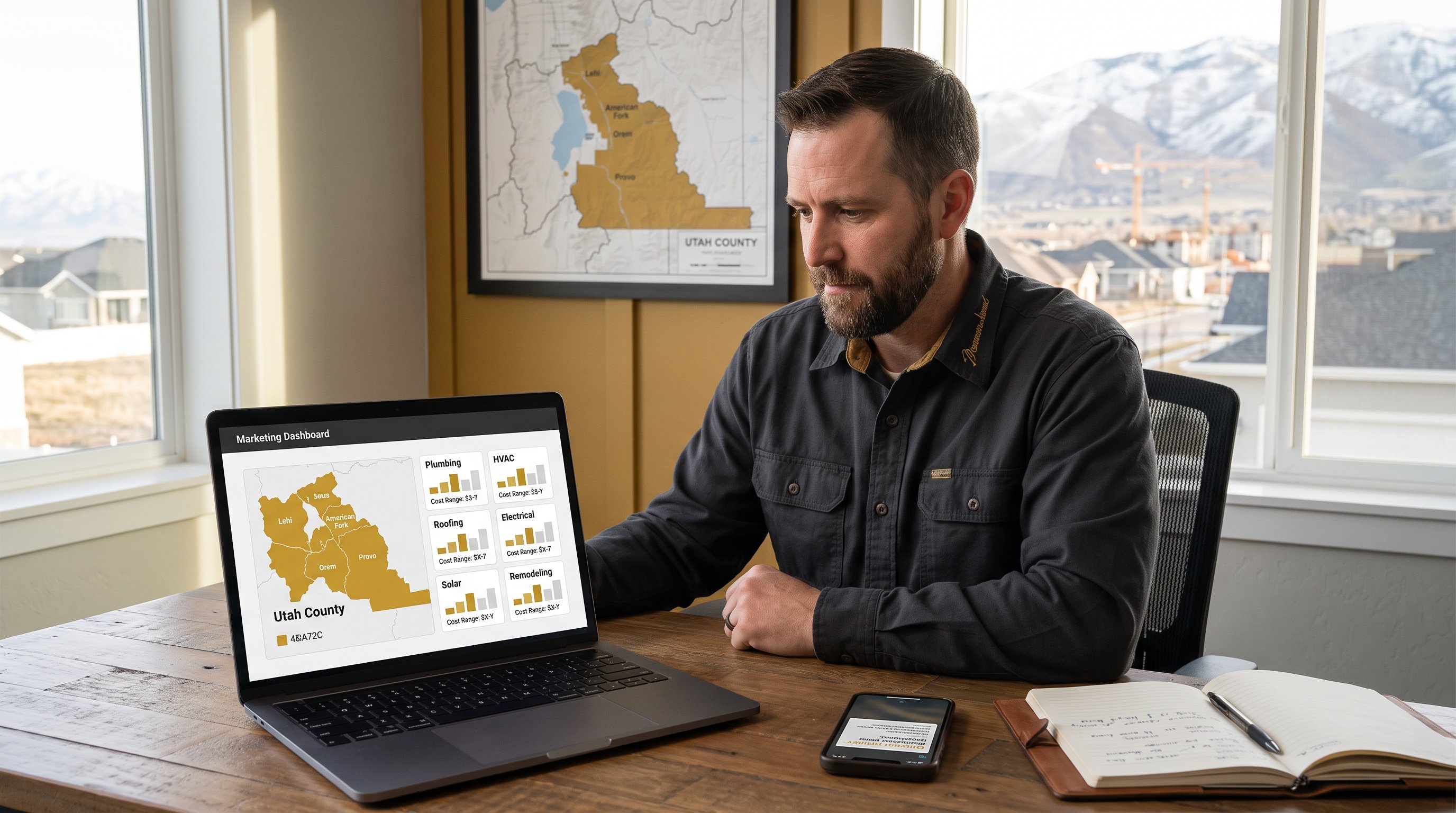
Lead pricing in Utah County reflects both homeowner intent and contractor competition. A caller searching "emergency plumber near me" is commercially valuable because the need is immediate. Someone browsing patio ideas may become a customer months later. Paid search, Local Services Ads, organic SEO, social campaigns, and referral systems also produce different cost profiles.
For planning, we should treat these figures as ranges rather than promises. Actual results change with season, reviews, service radius, landing-page quality, budget, and how quickly a company answers. Our own benchmark should always be based on verified, exclusive inquiries, not impressions, clicks, or raw form submissions.
High-Demand Trade Lead Costs
Emergency plumbing and HVAC replacement leads commonly fall around $50–$150 each in competitive Utah County cities such as Lehi, American Fork, Orem, and Provo. Routine service calls can be cheaper, but they may generate less revenue. HVAC replacement, sewer work, repiping, and water-heater emergencies generally support higher acquisition costs because a single job can be worth several thousand dollars.
Roofing leads often run approximately $75–$200, with storm, leak, and full-replacement inquiries carrying different economics. Electrical leads may range from $40–$125, while flooring and smaller handyman-style projects frequently sit lower. These are planning ranges, not fixed rate cards: keyword bids can rise sharply after storms or during peak replacement periods.
For a broader local strategy, our contractor marketing in Utah combines paid acquisition with organic visibility, allowing high-ticket businesses to avoid relying on one traffic source.
Specialty, Seasonal, and Longer-Cycle Trade Leads
Solar, concrete, remodeling, basements, and premium landscaping often produce more expensive leads, roughly $100–$300+, because the campaigns target fewer homeowners and the sales cycle is longer. A solar consultation may require several conversations before a contract. A $50,000 basement renovation needs trust, financing clarity, design guidance, and a site visit.
Seasonality matters in the Wasatch Front. April through October is generally the strongest period for exterior work, landscaping, concrete, roofing, and foundation projects. Snow and freezing temperatures constrain some work during winter, although indoor remodeling, HVAC, plumbing, and emergency roofing demand can remain active.
Local messaging should also change by area. New construction and drainage concerns matter in Eagle Mountain and Saratoga Springs: HOA-compliant outdoor design matters in Daybreak and South Jordan: historic restoration language may resonate more in older Salt Lake neighborhoods. Better relevance can raise conversion rates even when click costs stay unchanged.
Lead Quality, Competition, and Exclusivity
A $90 exclusive lead can be cheaper than a $35 shared lead if it converts. Shared inquiries force contractors to compete on response time and price, sometimes against four or five companies. The invoice hides the operational cost: wasted callbacks, frustrated estimators, and lower close rates. Our exclusive contractor leads are designed around one-business delivery rather than resale to multiple contractors.
We should define a qualified lead before comparing vendors. Useful criteria include service location, requested trade, homeowner intent, project scope, phone validity, and whether the prospect can schedule an estimate. Duplicate and spam calls should be removed from reporting. A lead source that reports every form fill as a success may look inexpensive while producing very few real opportunities.
Territory exclusivity can also change the value equation. A one-partner-per-market model gives a contractor more room to answer, diagnose, and sell without racing identical providers to the same homeowner.
How to Set a Profitable Utah County Contractor Lead Budget
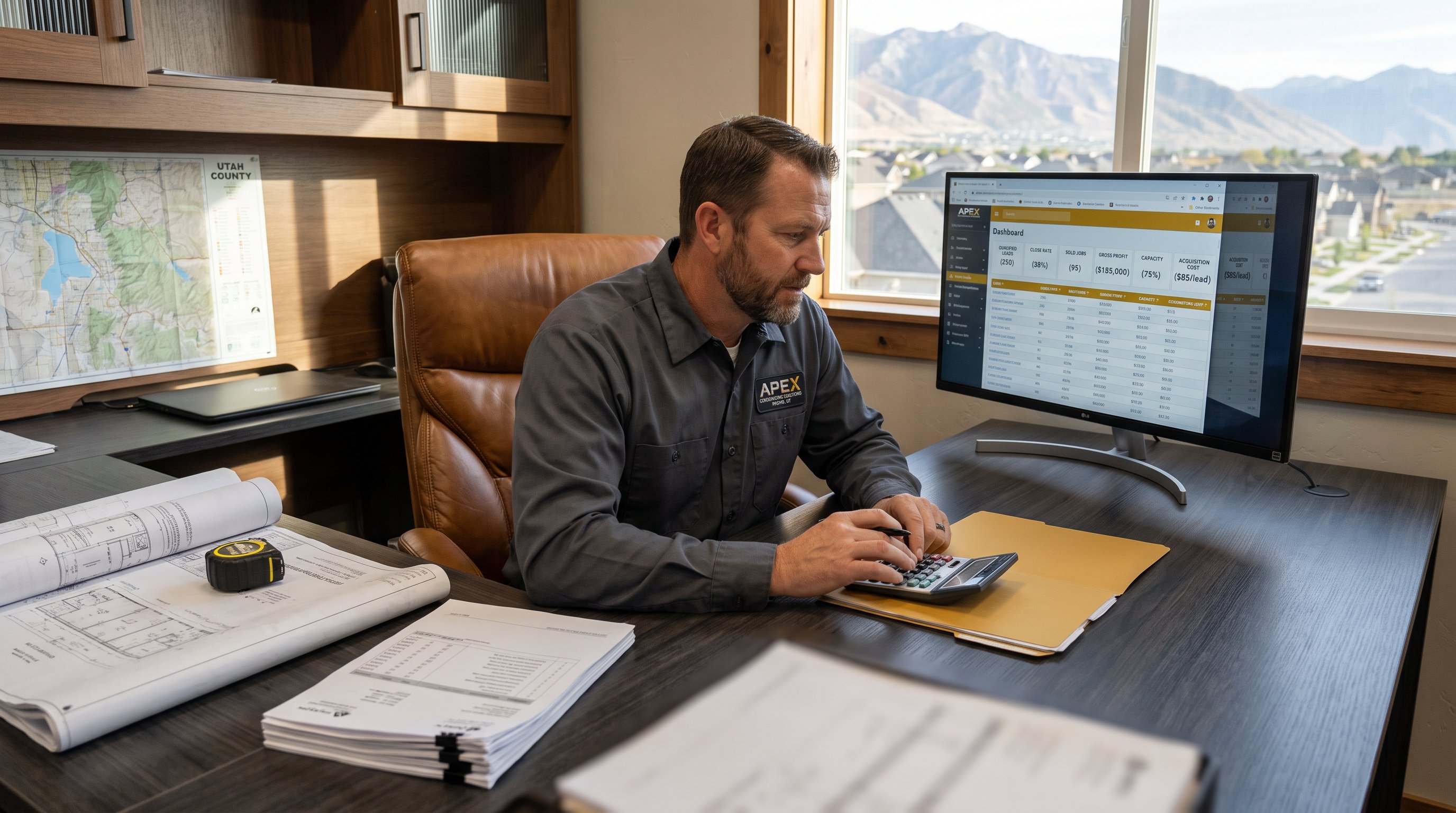
A sensible budget starts with unit economics, not an arbitrary monthly ad number. We should know the average sold-job value, gross-margin dollars, close rate, cancellation rate, and the percentage of leads that are genuinely serviceable. Once those numbers are visible, an expensive lead may be perfectly acceptable, and a cheap one may be wasteful.
Calculate Break-Even Cost per Lead
The basic formula is:
Break-even cost per lead = average gross profit per sold job × lead-to-sale close rate.
Suppose an HVAC replacement produces $4,000 in gross profit and we close 20% of qualified leads. The break-even lead cost is $800. That does not mean we should spend $800: it means any cost below that theoretically contributes positive gross profit before overhead. If the same company closes only 5%, break-even falls to $200.
We should use contribution profit rather than revenue. A $12,000 remodel can have a much smaller usable margin than a $3,000 plumbing project. Include salesperson time, estimator mileage, financing fees, materials, callbacks, and discounts when calculating actual profit. Then set a target acquisition cost below break-even, perhaps 25% to 50% below it, to leave room for volatility.
Set Trade-Specific Budgets and Acquisition Assumptions
Budgets should reflect capacity. If a roofing company can profitably install 20 additional roofs but has only two estimators, buying 100 monthly leads creates a bottleneck. Conversely, an HVAC company with open technician capacity may rationally spend more to capture urgent demand.
We can build a simple forecast: expected leads multiplied by qualification rate, close rate, average gross profit, and serviceable capacity. For example, 50 leads at an 80% qualification rate and a 15% close rate produce approximately six jobs. At $5,000 in gross profit per job, that is $30,000 in gross profit before marketing and operating costs.
Channel mix matters too. Google Ads and Local Services Ads can generate immediate demand: SEO generally compounds more slowly. Our SEO cost guidance for contractors helps separate an ongoing visibility investment from a pay-per-lead expectation.
Track ROI Before Scaling
At minimum, we should track source, campaign, keyword or service, contact date, answer status, qualification, estimate date, sold value, gross profit, and revenue collected. A CRM makes this practical, especially when calls, texts, forms, and booked estimates enter one pipeline.
Judge performance over a meaningful sample. One sold kitchen remodel can distort a week of data: 60 to 90 days usually gives a clearer view for longer-cycle trades. Compare cost per qualified lead, cost per estimate, cost per sold job, and marketing-generated gross profit, not just cost per click.
Scaling should follow evidence. Increase spend when capacity exists, quality is stable, and follow-up is reliable. If close rates fall as volume rises, the problem may be lead qualification or sales execution rather than advertising.
Turning More Utah County Leads Into Booked Jobs
Acquisition cost is only half the equation. The same campaign can look profitable for one contractor and disappointing for another because one answers every call, schedules efficiently, and follows up while the other lets inquiries sit until the crew returns from the field.
Respond Quickly and Qualify the Opportunity
Speed matters most for emergency services. We should use an immediate call response, missed-call text-back, and a short intake process that confirms location, problem, urgency, ownership, and preferred appointment time. Automated SMS can acknowledge the inquiry, but it should lead quickly to a real person or an online booking option.
Qualification protects the schedule. Ask whether the homeowner needs repair, replacement, design, or a quote: whether the property is inside our service area: and whether there are timing, budget, HOA, access, or permitting constraints. For a concrete or remodeling project, collecting photos and approximate dimensions before the visit can improve estimator productivity.
A lead should not be marked "bad" simply because it does not book on the first call. Some projects require education. We can place viable prospects into a structured follow-up sequence instead of abandoning them after one voicemail.
Improve Estimates, Follow-Up, and Close Rates
A professional estimate is part of marketing. We should arrive when promised, explain options clearly, document the existing condition, and make the next step easy. Roofing proposals may distinguish repair, replacement, ventilation, and ice-dam prevention. Landscaping proposals can show phased designs, maintenance implications, and HOA considerations. Specificity builds confidence.
Follow-up should have a rhythm. A practical sequence might include contact the same day, a written estimate, a call within 24 to 48 hours, and useful answers to common objections over the next two weeks. The message should add value rather than repeat "just checking in."
Our broader contractor marketing services can connect ads, local SEO, video, reputation management, and CRM automation so the homeowner experience feels consistent from first search to signed proposal.
Use Conversion Data to Lower Effective Lead Costs
Improving conversion is often faster than lowering ad prices. If 50 leads cost $5,000 and produce five jobs, the acquisition cost per sold job is $1,000. Raise the close rate from 10% to 15% without increasing spend, and the same 50 leads produce roughly 7.5 jobs: effective acquisition cost falls to about $667 per job.
We should review recordings, missed calls, estimate notes, and lost-job reasons every month. Are prospects outside the service area? Are calls answered by voicemail? Are estimates too slow, too vague, or missing financing? Are campaigns attracting low-value tune-ups when the goal is replacements?
The most useful dashboard ends with booked revenue and gross profit. High-ticket contractors, including solar, remodeling, concrete, and roofing businesses, should optimize for profitable jobs, not the largest lead count. In Utah County, that discipline turns a lead budget into a repeatable growth system rather than a monthly gamble.
Contractor Lead Cost FAQs in Utah County
What is the average cost of exclusive contractor leads in Utah County by trade?
In Utah County, exclusive contractor leads typically cost between $40 and $250 depending on the trade. Emergency HVAC and plumbing leads are often $50–$150, while roofing, solar, and remodeling leads can range from $100 to $300 or more.
How does trade type affect contractor lead costs in Utah County?
Lead costs vary by trade due to homeowner urgency and project value. Emergency trades like plumbing and HVAC often have lower mid-range costs, while high-ticket trades such as solar, concrete, and remodeling tend to have more expensive leads because of longer sales cycles and fewer qualified homeowners.
Why should I avoid buying shared contractor leads in Utah County?
Shared leads are sold to multiple contractors, increasing competition and reducing close rates. Exclusive leads, like those provided by local experts, give you territorial protection and higher conversion potential, making your marketing investment more profitable.
How can I calculate a profitable lead cost for my Utah County contracting business?
Calculate your break-even cost per lead by multiplying the average gross profit per sold job by your lead-to-sale close rate. Then, set your target lead cost below this threshold—often 25–50% lower—to ensure profitability and allow for market volatility.
What factors influence seasonal changes in contractor lead costs in Utah County?
Seasonality impacts exterior work significantly. April through October is peak season for roofing, landscaping, and concrete leads, often increasing costs due to demand. Winter slows exterior jobs but can maintain indoor work and emergency services, affecting lead volume and price.
How does local expertise improve contractor lead generation and sales in Utah County?
Local agencies tailor marketing to specific zip codes, environmental challenges, and homeowner needs, such as HOA compliance or historic restoration. Coupled with exclusive leads and quick response systems, this improves lead quality, conversion rates, and ROI for Utah County contractors.