 midas media.
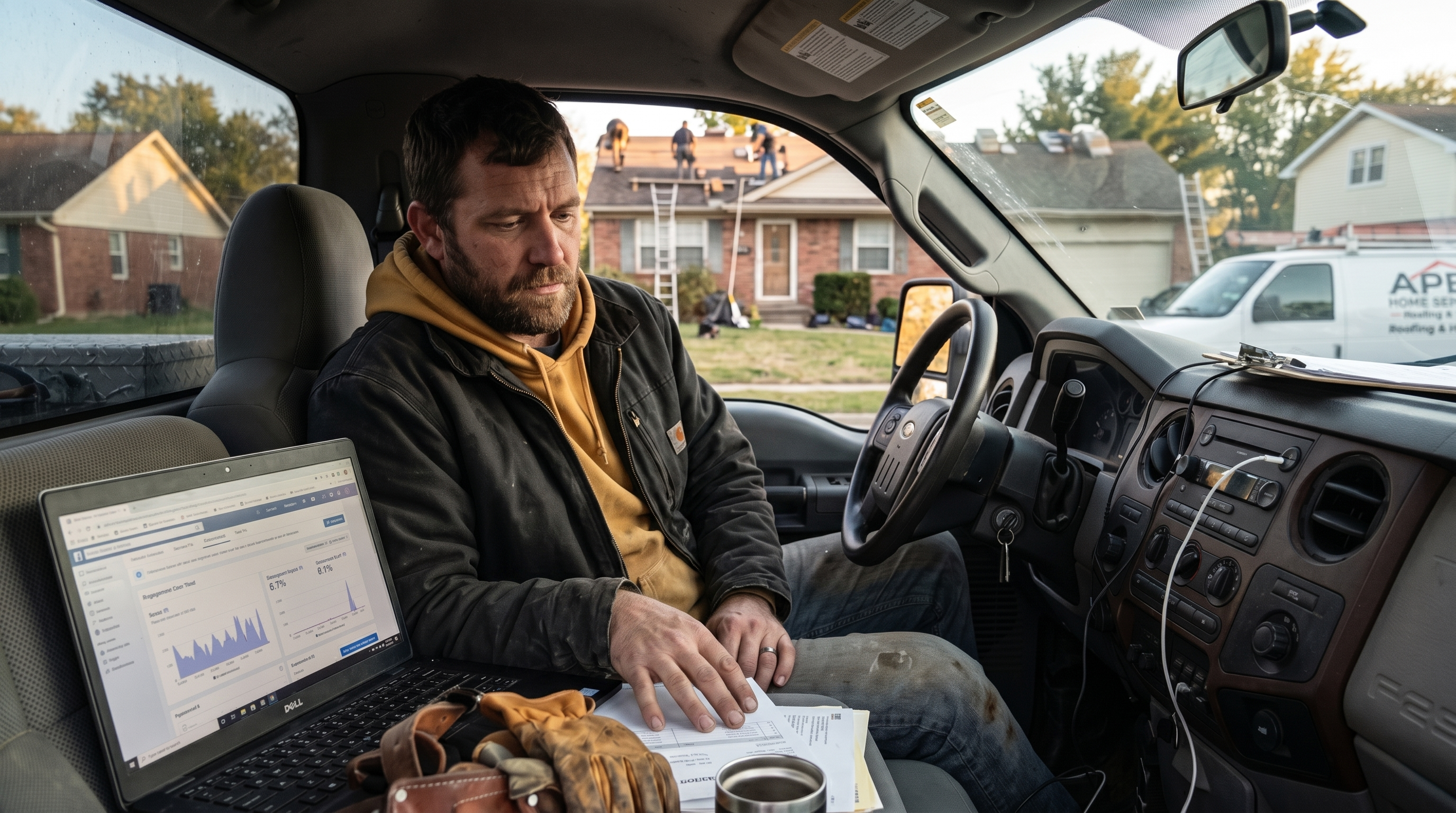
A lot of contractors don't lose money on Facebook because the platform "doesn't work." They lose it because they chase the wrong signal. We've seen companies spend a couple thousand dollars trying to make a business page look popular, only to end up with inflated like counts, weak engagement, and fewer real opportunities. On paper, 5,000 page likes can look impressive. In practice, if those likes come from fake, low-quality, or irrelevant accounts, they can quietly poison your marketing. For high-ticket home service contractors, buying likes isn't a shortcut. It's usually an expensive detour away from leads, trust, and booked jobs.
What Bought Facebook Likes Really Mean For Your Business Page
When we buy Facebook likes, we're usually not buying attention, trust, or future customers. We're buying a number.
That number can feel good for a minute. A roofing company with 8,000 likes looks bigger than one with 380, right? Maybe. But homeowners are better at spotting fake momentum than many businesses think. If a page has thousands of likes and each post gets two reactions, the mismatch is obvious.
For contractors, this matters because local buyers don't hire based on vanity metrics alone. They hire based on signals that reduce risk: recent jobs, reviews, before-and-after photos, quick responses, recognizable service areas, and proof that real people are paying attention.
Bought likes usually come from low-quality accounts, click farms, or users far outside your market. That means they're not future plumbing customers in your county, not homeowners comparing HVAC quotes, and not commercial property managers looking for concrete work. They're just dead weight on the page.
And that dead weight distorts your data. It makes your audience look larger than it is while lowering the percentage of followers who actually interact. So instead of giving Facebook a clean picture of who cares about your content, we feed it noise. For a local service business, that's a bad trade every time.
How Fake Likes Damage Engagement, Credibility, And Account Health
The biggest hidden problem is engagement decay. Facebook has long relied on user interaction signals, likes, comments, shares, clicks, watch time, to decide what deserves more reach. Older marketers still call this EdgeRank, and while the algorithm is far more complex now, the core idea hasn't changed: if your audience doesn't engage, your visibility suffers.
Fake followers don't engage like real local prospects. They don't comment on your finished basement project. They don't message for an emergency electrical estimate. They don't share your spring AC tune-up offer with neighbors. So your engagement rate drops, and your posts can reach fewer of the real people who might've cared.
That creates a second problem: credibility. Homeowners notice when a company page looks off. A landscaper with 12,000 likes and no meaningful conversation under posts doesn't look established: it looks staged. Social media users are savvy. If the social proof feels fake, trust falls fast.
There's also platform risk. Buying likes can put a business close to, or directly in violation of, platform rules around inauthentic activity. Facebook has spent years removing fake accounts at massive scale, and agencies like the FTC's consumer guidance regularly warn businesses and consumers about deceptive online practices more broadly. Even if a page isn't banned, poor-quality audience signals can still hurt performance.
Worst of all, once those weak followers are attached to the page, they often continue dragging results down. You may end up paying more in ads just to reach the real audience you should've built in the first place.
Why Home Service Contractors Lose Money When Vanity Metrics Replace Real Leads
For home service contractors, this mistake is more expensive than it is for many other businesses because one real lead can be worth hundreds or thousands of dollars.
If we're talking roofing, solar, remodeling, or foundation work, a single qualified appointment can justify serious ad spend. So when budget gets diverted into bought likes, the opportunity cost is brutal. That money could've funded local video ads, retargeting, lead forms, review campaigns, or follow-up systems that actually create revenue.
Let's say a contractor spends $2,500 on page-like campaigns or third-party likes. Best-case scenario, the page looks busier. But if those people never book, never call, never refer, and never engage, there's no business asset being created. There's no pipeline.
Worse, vanity metrics can fool us into thinking marketing is working when it isn't. We start reporting "growth" instead of measuring booked estimates, cost per lead, close rate, and revenue by service line. That's how businesses stay busy posting while the phone stays quiet.
Local service marketing is already competitive. HVAC, plumbing, electrical, and flooring companies don't need broader but weaker attention. They need tighter local demand from homeowners who are actually in-market. A hundred real people in the right ZIP codes are more valuable than 10,000 random likes from accounts that will never need a panel upgrade or roof replacement.
That's the core issue: fake popularity feels like momentum, but it doesn't create sales conversations. And for contractors, conversations are what turn into trucks on driveways and deposits in the bank.
What To Do Instead: Build Trust, Social Proof, And Qualified Local Demand
If we want Facebook to help a contracting business grow, we need to treat it like a trust-building and demand-capture channel, not a scoreboard.
Start with audience quality. Run campaigns only in the service area, and exclude the broad, low-intent targeting that often attracts junk traffic. Better yet, optimize for actions that matter: messages, calls, lead forms, website visits, and video views from local prospects.
Then fix the content mix. A page full of disguised ads gets ignored. A page that mixes offers with useful, human content performs better. An easy rule is 80/20: most posts should educate, reassure, or show proof, while a smaller share promotes directly. For contractors, that can include:
- before-and-after project photos
- short jobsite videos
- seasonal maintenance tips
- common pricing questions
- team spotlights
- customer testimonials
- permit, timeline, or material explainers
Posting timing matters too. We should publish when local customers are actually active, then adjust based on performance instead of guessing. And when a post gets traction, respond. Real conversation builds more real conversation.
This is also where a stronger lead system changes everything. At Midas Media Firm, our model is built around exclusive territory protection and guaranteed lead flow, not vanity metrics. With a one-partner-per-market approach, contractors aren't fighting three competitors for the same funnel traffic. That's a much healthier use of budget than buying likes and hoping appearances somehow turn into revenue.
In other words, the win isn't "looking big." The win is becoming the contractor local buyers already trust before they even call.
Conclusion
Buying Facebook likes is one of those marketing moves that looks harmless until the bill shows up somewhere else, in weaker reach, lower trust, and missed leads. For contractors, the better play is simple: trade fake popularity for real local attention. If we focus on relevance, proof, and qualified demand, Facebook can still be a strong channel. Just not the way click farms promised.