 midas media.
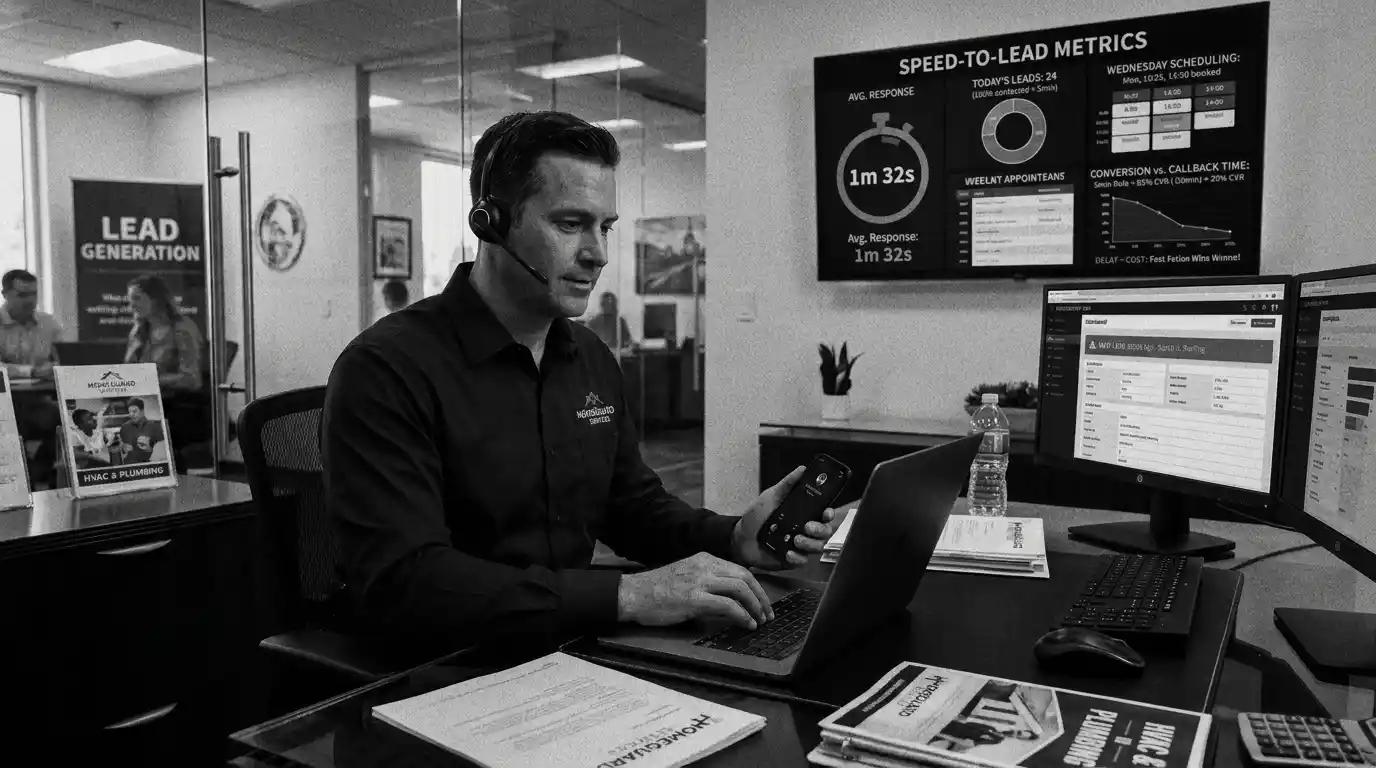
A homeowner doesn't request a quote for a roof, HVAC replacement, or full remodel because they're casually browsing. Usually, something hurts: a leak, a dead unit, a tight timeline, a project budget they're finally ready to spend. That's why the 5-minute rule matters so much in home services. If we wait too long to call, text, or follow up after the first inquiry, lead intent drops fast, and so does our chance of booking the job. For contractors paying real money for high-value leads, speed-to-lead isn't a nice extra. It's one of the biggest factors behind close rate, marketing ROI, and whether good leads turn into signed work.
What The 5-Minute Rule Means For Contractors
The 5-minute rule is simple: we should respond to a new lead within five minutes whenever possible. Not five hours. Not "by the end of the day." Five minutes.
In practical terms, that means the moment a homeowner fills out a form, calls after hours, or requests an estimate, our business should trigger an immediate response. For contractors, this isn't just about courtesy. It's about catching the prospect while urgency is highest.
In roofing, plumbing, HVAC, electrical, and remodeling, buyers often contact multiple companies at once. The first contractor to respond professionally usually earns the first real conversation. And the first real conversation often sets the appointment.
That matters even more for expensive jobs. A $15,000 roof replacement or a $25,000 remodel isn't won by whoever has the prettiest logo. It's often won by whoever shows up fastest, sounds trustworthy, and makes the next step easy. Speed signals competence. Delay signals risk.
Why Lead Intent Drops Fast After The First Inquiry
Lead intent is strongest right after the prospect reaches out. That's the moment they're motivated, emotionally engaged, and ready to talk details. Every minute after that, the temperature drops.
Here's what usually happens: they submit a form to three companies, one texts back immediately, another calls in ten minutes, and a third reaches out the next morning. By then, the homeowner may have already scheduled an estimate, gotten preliminary pricing, or mentally crossed the slow company off the list.
People don't stay in "decision mode" very long. Work gets busy. Kids need pickup. The leak stops dripping. The urgency fades just enough for them to procrastinate.
And if they were searching for a premium home service provider, they often interpret a slow callback as a preview of the customer experience. If we're hard to reach before the sale, they assume we'll be worse after it. That's a damaging first impression, and an avoidable one.
How Slow Response Times Drain Your Marketing Budget And Close Rate
Slow callbacks don't just cost a few opportunities around the edges. They actively waste the money we spend generating leads.
If we're investing in Google Ads, Local Services Ads, SEO, mailers, or lead generation partnerships, every inquiry has an acquisition cost behind it. When response time is poor, we're paying for leads we never really worked.
This is where contractors quietly lose margin. They look at campaign performance and assume the lead quality is weak, when the real issue is follow-up speed. A lead that goes cold in 30 minutes can look "bad" in the CRM even though it was perfectly viable at minute one.
Close rate takes the hit too. The contractor who responds first often frames the conversation, sets expectations, and books the site visit. Everyone else is playing catch-up.
That's one reason exclusive lead models matter. With a provider like Midas Media Firm, the one-partner-per-market approach helps ensure leads aren't being shared across competing contractors in the same territory. (In fact, you can grab our free Contractor Growth Bundle to see exactly how we map these custom exclusive campaigns out). But even exclusive leads lose value if we let them sit. Fast response is still what turns opportunity into revenue.
The Biggest Reasons Home Service Businesses Call Back Too Late
Most contractors don't respond slowly because they don't care. They respond slowly because the system is broken.
One common problem is owner dependence. The business owner wants to personally handle every inbound lead, but they're on a jobsite, driving, meeting a crew, or solving a fire somewhere else.
Another issue is scattered lead sources. Some inquiries come through forms, some through Facebook, some by phone, some through website chat. If those channels aren't centralized, leads get missed or delayed.
Then there's after-hours leakage. A homeowner fills out a form at 8:47 p.m., and nobody sees it until the next morning. In many cases, that lead is already talking to someone else.
We also see weak process discipline. No notification rules. No auto-text. No call queue. No follow-up cadence. Just good intentions and inbox clutter.
The result isn't random. It's predictable. Without a defined speed-to-lead process, even strong teams end up calling back too late.
What A Fast Lead Response System Looks Like In Practice
A fast lead response system doesn't need to be complicated, but it does need to be intentional.
First, every lead source should flow into one place: CRM, inbox, call platform, or dispatch system. If we can't see leads instantly, we can't respond instantly.
Second, the system should trigger immediate acknowledgment. That usually means an automated text and email confirming receipt, setting expectations, and inviting the prospect to reply. Something simple works: "Thanks for reaching out, our team is reviewing your request now and will contact you shortly."
Third, there should be a live human follow-up as fast as possible. Ideally within five minutes during business hours. If the lead doesn't answer, we should leave a voicemail, send a text, and try again on a short sequence.
Finally, ownership must be clear. Who responds first? Who books the estimate? Who handles nights and weekends? Good systems remove ambiguity. Everybody knows the next move, and leads stop slipping through the cracks.
How To Improve Speed-To-Lead Without Adding More Office Staff
Most contractors don't need a bigger admin team first. They need better workflow.
Start by tightening notifications. Instant SMS and app alerts beat email every time. If a new lead arrives, the right person should know immediately.
Next, automate the first touch. An auto-text can buy us crucial minutes and keep the lead warm until a real person calls. This is especially useful for evenings and weekends.
We should also use routing rules. If one estimator is busy, the lead rolls to the next available person. If no one answers, it triggers a backup sequence instead of dying in the queue.
Call tracking and missed-call text-back tools help too. Plenty of home service leads call first, and a missed call without an instant response is often a lost opportunity.
Free Tool: Clone Our Missed-Call Text-Back System
Don't spend thousands hiring software developers or extra admin staff to fix this. You can instantly copy our exact, battle-tested speed-to-lead engine directly into your account for free.
Claim Your Free Contractor Bundle →And just as important, measure response time as a core KPI. Not vaguely. Specifically. If we track average speed-to-lead, contact rate, and booked appointment rate together, the bottleneck becomes obvious, and fixable.
Conclusion
The 5-minute rule isn't a theory. In home services, it's a practical line between wasted leads and won jobs. When we respond fast, we protect intent, improve close rate, and get more return from every marketing dollar. When we don't, even exclusive, high-value leads can vanish. The fix usually isn't more leads. It's a faster system.
Ready to close more jobs on autopilot?
Click here to claim the Free Contractor Growth Bundle (10-Page Blueprint + SMS Text-Back Workflow) now.