 midas media.
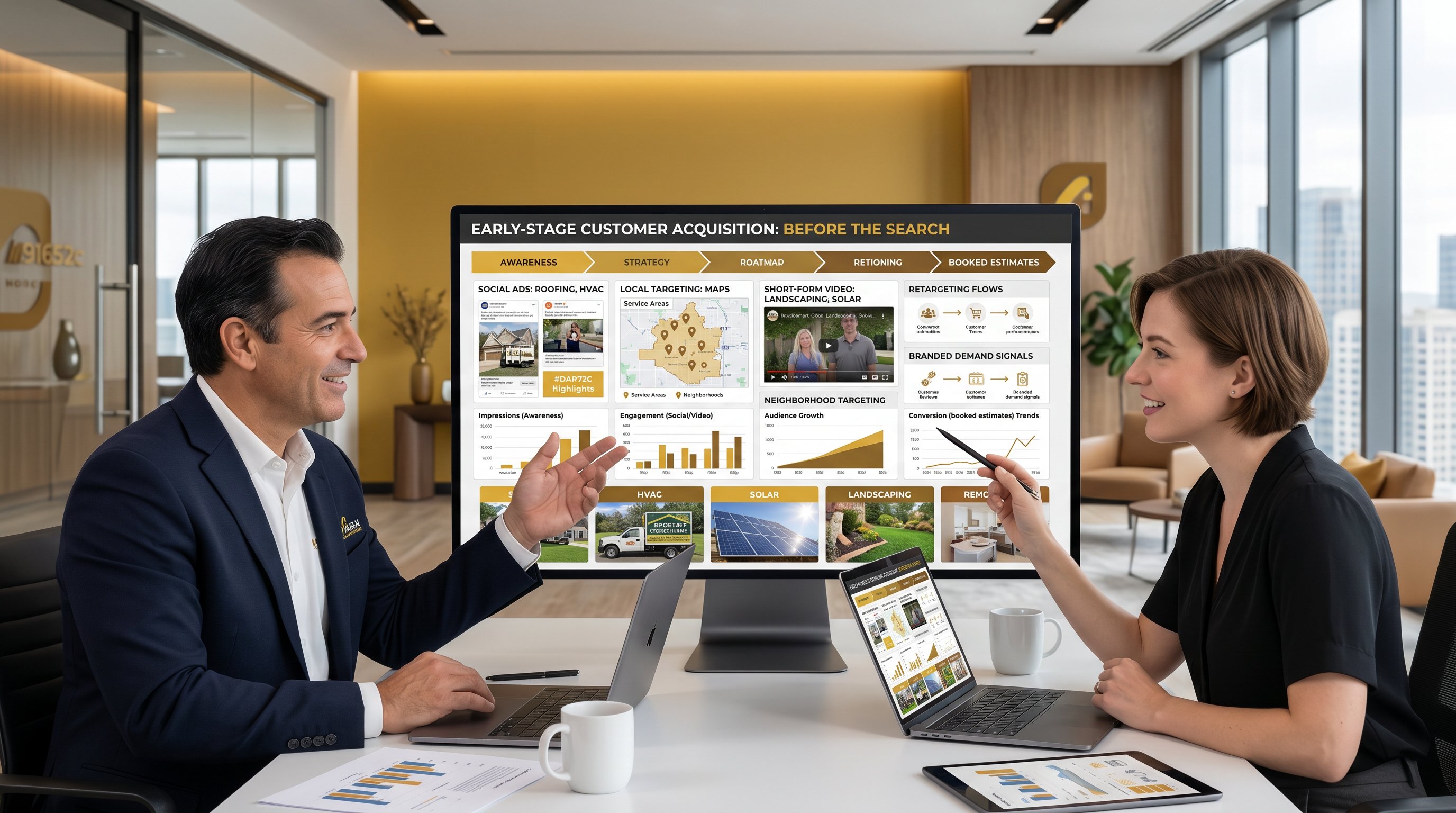
Most contractors pour budget into Google Search because it feels logical: wait until a homeowner needs help, then show up first. That still matters. But in 2026, the biggest growth often happens earlier, before the search, before the estimate request, and before competitors even know a project is forming. We've seen high-ticket home service companies win better jobs by shaping demand upstream, not just capturing it at the last second. If we want more profitable roofing, HVAC, plumbing, landscaping, solar, concrete, flooring, electrical, and remodeling work, we need to influence homeowners before urgency pushes them to Google.
Why Waiting For Google Searches Means You Miss High-Value Homeowners
Search traffic is valuable, but it catches homeowners late in the decision cycle. By the time someone types "roof replacement near me" or "basement finishing contractor," they may already have brand impressions from neighbors, Instagram videos, Facebook groups, yard signs, or a contractor they saw weeks ago. That earlier exposure shapes who gets the click, the call, and usually the premium-margin job.
High-value homeowners rarely make six-figure outdoor living, solar, remodel, or structural improvement decisions in one sitting. They collect signals over time. They notice which companies look established, which crews seem clean and professional, and which brands appear repeatedly in their area. When the need becomes urgent, a failed HVAC system, storm damage, a plumbing emergency, they don't start from zero.
That's why relying only on bottom-of-funnel search can trap contractors in a reactive game. We may still generate leads, but often at higher costs and under more price pressure. The contractors who build familiarity early usually close at better rates because trust was forming long before the estimate appointment.
Where Homeowners Start Forming Buying Intent Before They Ever Search
Homeowners build intent in surprisingly ordinary places. They scroll short-form video while relaxing at night. They browse local Facebook groups for recommendations. They watch a neighbor install a new roof or patio. They drive through Daybreak, Sugar House, or Saratoga Springs and notice signs, trucks, and finished projects. Then an idea gets planted: "We should probably do ours too."
For high-ticket contractors, that pre-search window is where future demand starts. A homeowner in Park City may not search for a roofer today, but after another winter of snow load issues and ice dams, a message about wind-rated, heavy-snow solutions sticks. A family in Eagle Mountain may not be ready for a $70,000 basement finish today, but content about turning unfinished space into usable square footage can move the project from "someday" to "this year."
Intent also forms through life events: moving, refinancing, expanding a family, aging in place, or trying to cut utility bills. If we show up during those moments with relevant, local messaging, we're not interrupting. We're helping homeowners name a problem they were already beginning to feel.
How To Build Demand In Your Market Before Competitors Enter The Conversation
Building demand early means becoming familiar before becoming urgent. In practice, that looks like consistent visibility across the platforms homeowners already use, paired with messaging tied to real local conditions. Generic branding won't do much. Specificity does.
For example, a concrete contractor in Utah County can speak directly to expanding clay soil, drainage issues, and unfinished basement opportunities. A landscaper in South Jordan can address HOA-friendly design, water-wise upgrades, and compact outdoor living layouts. A roofer in Park City can lead with snow load performance, canyon wind resistance, and ice dam prevention. The more local and problem-aware the message, the more memorable the company.
This is also where a direct-to-consumer strategy matters. If we depend on shared-lead platforms, we enter the conversation late and commoditized. If we build our own demand engine with video, paid social, local SEO support, retargeting, and fast follow-up systems, we create branded demand that belongs to us. That's a much stronger position than bidding on the same tired lead everyone else bought.
Messaging That Makes Homeowners Remember Your Company When The Need Becomes Urgent
The best messaging is not clever. It's concrete, visual, and tied to a homeowner's actual stakes. "We install quality roofs" is forgettable. "Engineered roofing systems built for heavy snow loads and canyon winds" is memorable. "We do landscaping" blends in. "Outdoor living designs that maximize smaller HOA-controlled lots" feels relevant.
We also want proof. Before-and-after videos, job-site walkthroughs, homeowner testimonials, and footage of clean crews all reduce perceived risk. High-ticket buyers are not just purchasing a service, they're deciding who to trust with their home, their money, and a disruptive project. That's why high-production video content works so well. It lets homeowners pre-qualify us emotionally before they ever fill out a form.
The Best Channels For Reaching Local Homeowners Early
The best early-stage channels are usually visual, local, and repeatable.
Paid social is one of the strongest options because it creates demand before search intent peaks. Facebook and Instagram still work well for homeowners, especially when campaigns are micro-targeted by zip code, home value, neighborhood type, or likely service need. Video ads are especially effective for remodeling, outdoor living, roofing, solar, and premium replacement work.
YouTube is underrated for contractors. Homeowners spend time there researching ideas long before they request estimates. Educational content, project explainers, and short local video ads can make a brand feel established fast.
Google Display and retargeting help keep us visible after someone visits a site, watches a video, or clicks an ad. That repeated exposure matters. Familiarity compounds.
Local SEO and Google Business Profile optimization still matter, not just for capturing existing demand but for validating the brand homeowners already noticed elsewhere. When they finally search, we want the map pack, reviews, and photos to confirm what earlier marketing introduced.
And for Utah contractors in particular, hyper-local campaign segmentation is a huge advantage. Messaging in the Avenues should not sound like messaging in Daybreak or Vineyard. Different homes, different regulations, different homeowner priorities.
How To Measure Whether Early-Stage Marketing Is Turning Into Real Jobs
This is where many contractors get sloppy. They judge early-stage marketing by vanity metrics, views, clicks, impressions, and miss whether it's producing booked estimates and closed revenue. We need a tighter chain from awareness to job.
Start with branded search lift. If more homeowners are searching our company name over time, that's a strong sign demand is being created upstream. Next, track direct traffic, video engagement from service-area audiences, lead form conversion rates, and call volume by campaign source.
More importantly, measure operational outcomes: how many exclusive leads became booked estimates, how fast the team responded, and how many of those estimates turned into high-margin jobs. Speed-to-lead matters a lot here. Instant SMS follow-up and online booking can rescue leads that would otherwise cool off while the crew is in the field.
At Midas Media, this is the lens we care about most. We don't treat shared leads or raw PPC traffic as the goal. We focus on exclusive territory protection, booked estimates, and accountable volume, 50+ exclusive leads per month as a baseline for many contractors, with legal one-partner-per-market protection so the demand we build doesn't get handed to a local competitor. That makes measurement much cleaner, and frankly, much more useful.
Conclusion
If we only market to homeowners once they search Google, we're showing up late. The better play in 2026 is to shape demand earlier, through local relevance, repeat visibility, strong creative, and systems that turn attention into booked estimates. Contractors who win first in the homeowner's mind usually win the job later too. That's how we stop chasing demand and start creating it.