 midas media.
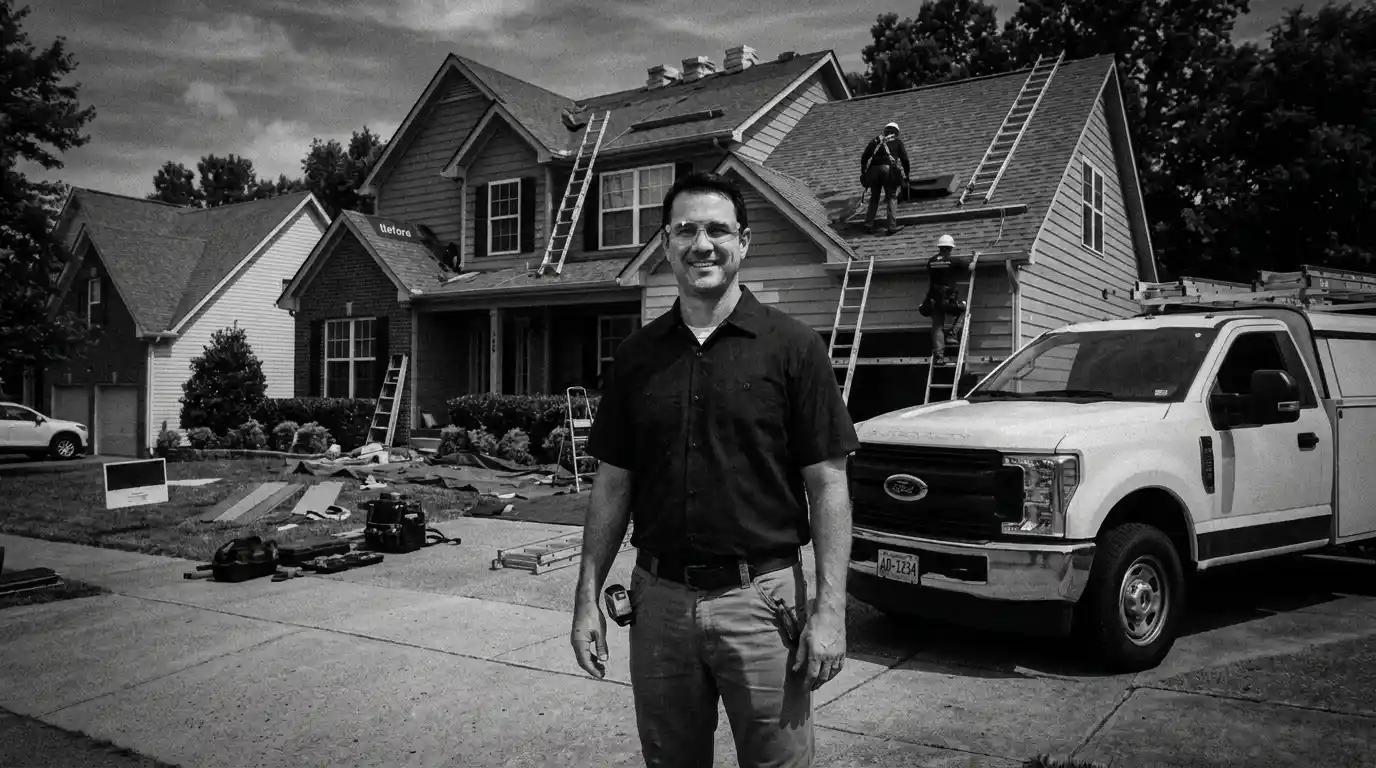
A homeowner can spot a fake-feeling contractor website in seconds. The polished handshake photo. The spotless kitchen nobody on your crew has ever worked in. The smiling "technician" who's clearly a stock model. In 2026, that kind of imagery doesn't just look generic, it quietly kills trust.
For high-ticket home service contractors, trust is the sale before the estimate is even booked. We've seen it across roofing, HVAC, plumbing, landscaping, solar, and remodeling: real job photos consistently outperform stock images because they prove you do the work, in real homes, with real results. If you want more qualified leads, your camera roll matters more than most contractors realize.
Why Stock Photos Hurt Trust For Home Service Contractors
Home service marketing is different from ecommerce or SaaS. We're asking people to invite strangers onto their property, into mechanical rooms, onto roofs, and sometimes into their homes during stressful moments, burst pipes, failed AC units, storm damage, unsafe electrical panels. That decision is emotional before it's rational.
Stock photography creates friction at exactly that moment. Even when the image looks "professional," it often signals that the business is hiding behind generic branding. Homeowners may not consciously say, "That's a stock image," but they feel the gap. And once they feel a gap, they start questioning everything else: your reviews, your workmanship, your pricing, even whether you're truly local.
That trust issue matters more as homeowners become more cautious about scams, misleading claims, and bait-and-switch marketing. Guidance from the FTC's consumer advice reflects how much scrutiny consumers now place on business credibility signals. In contractor marketing, visuals are one of those signals.
If your website says "family-owned, local, honest workmanship," but the photos look like they came from a template library, the message doesn't land. Real photos close that credibility gap fast.
How Generic Images Make Your Company Look Like Everyone Else
There's another problem with stock photos: sameness. The home service space is already crowded with contractors making similar promises, fast response, quality work, fair pricing, licensed and insured, satisfaction guaranteed. When your visuals are generic too, you remove one of the few easy ways to stand out.
Think about what happens in a local search result. A homeowner clicks three contractor sites in a row. If all three use the same smiling installer, staged kitchen, or perfect lawn shot, those brands blur together instantly. You become interchangeable, which is dangerous in high-ticket services where differentiation supports premium pricing.
Real job imagery does the opposite. It gives your company fingerprints. Your truck wrap. Your uniforms. Your ladder setup. Your clean cuts on a paver install. Your crew working around a steep pitch roof after a wind event. Those details tell a homeowner they're looking at an actual operator, not just another lead-chasing website.
That's one reason we push visual proof so hard at Midas Media. Our contractor lead generation strategy is built around exclusivity, authority, and local trust, not borrowed polish. In competitive markets, especially where homeowners compare multiple bids, looking real is a sales advantage.
What Real Job Photos Communicate To Homeowners
Real job photos do more than "look authentic." They answer the quiet questions homeowners ask before they ever call.
First: Have you done this kind of work before? A gallery of actual installs, repairs, and transformations makes your experience visible. That matters whether you're selling a roof replacement, a panel upgrade, a basement finish, or a premium landscape build.
Second: Will your crew respect my property? Photos of organized tools, protective coverings, tidy job sites, and uniformed technicians signal professionalism. For homeowners investing five or six figures, that's huge.
Third: Do you understand homes like mine? Local photos create instant relevance. A roofing contractor showing steep-pitch homes in snow country or wind-rated exterior systems in exposed neighborhoods feels more believable than a generic suburban house image. Even broad homeowner education sites like Bob Vila reinforce how project context shapes buying decisions.
Fourth: Are you actually established? Real people, real trucks, real neighborhoods, real materials, that's social proof without saying the words "trust us."
And that's the key. Strong visuals reduce skepticism before your sales process even starts, which usually means better conversion rates, less price resistance, and more serious inquiries.
The Types Of Real Photos Every Contractor Should Capture
Most contractors don't need a full production crew to improve their photo library. They need consistency, a simple checklist, and enough discipline to document the work. Start with the images that directly support buying decisions.
Before-And-After Results
Before-and-after photos are still the highest-value visual asset for many home service businesses because they make transformation obvious. A stained concrete slab becomes a finished basement floor. A dead HVAC system becomes a clean, efficient replacement. A storm-damaged roof becomes a sharp, code-compliant install.
What makes these photos work is contrast. Use similar angles, decent lighting, and framing that highlights the problem and the finished result. Don't over-edit them. Homeowners don't need cinematic color grading: they need proof.
These photos also help justify premium pricing. When prospects can clearly see the upgrade in function, safety, appearance, or property value, they're less likely to compare you only on price. For remodeling and renovation projects, that visual payoff aligns with the kind of housing and improvement priorities tracked by HUD research.
Crew, Process, And In-Progress Jobsite Images
Finished results matter, but process photos often do the heavy lifting for trust. Show your crew arriving in branded vehicles, protecting floors, staging materials neatly, trenching safely, installing underlayment correctly, pressure-testing lines, or cleaning up at the end of the day.
Why? Because homeowners aren't only buying the result. They're buying the experience of having your company on-site.
Process photos communicate workmanship, systems, and accountability. They also separate skilled contractors from fly-by-night operators. If you're licensed, insured, and following trade standards, visual documentation supports that story, especially in industries where homeowners may not know what proper work should look like. Organizations tied to contractor regulation, such as state licensing oversight, exist for a reason: consumers care about legitimacy.
And if you want to go one level higher, pair these photos with short-form video. We've seen high-production visual content outperform static pages because homeowners get to see the crew, hear the explanations, and feel the professionalism in a way stock visuals never can.
When Stock Photos Are Acceptable And How To Use Them Carefully
Stock photos aren't forbidden. They're just a bad substitute for proof.
There are a few places where they can work: blog headers, broad service explainer pages that don't yet have custom visuals, or supporting graphics where the image is clearly decorative rather than evidentiary. If you're writing about seasonal maintenance, financing, or general homeowner education, a well-chosen stock image can be fine.
But we'd use them carefully. Never use stock photography to represent your team, your trucks, your office, or your completed work. That's where trust breaks. And don't let stock become the dominant visual language of your site. If every key page relies on generic imagery, your brand starts to feel thin.
A better approach is hybrid: real photos on service pages, project pages, testimonials, about pages, and local landing pages: stock only where it supports layout without making claims. As your photo library grows, phase stock out.
In practice, the contractors who win more leads in 2026 won't necessarily be the ones with the flashiest websites. They'll be the ones who look most believable, most local, and most proven. Real job pics do that better than stock ever will.