 midas media.

In high-ticket home services, leads don't age well. A homeowner searching for a roofer after a storm, an HVAC company during a breakdown, or a plumber for an emergency isn't browsing for fun, they want help now. That's why speed to lead for contractors has become one of the biggest revenue levers in 2026. We're not just talking about being polite or organized. We're talking about responding fast enough to shape the buying conversation before a competitor does. And when the jobs are worth $8,000, $20,000, or $100,000+, that response window matters more than most contractors realize.
What Speed To Lead Means In Home Services And Why It Directly Impacts Revenue
Speed to lead is the time between a prospect reaching out and your business responding in a meaningful way. In home services, that could mean answering an inbound call, texting back after a web form, or confirming an after-hours request before the homeowner moves on.
This isn't an admin metric. It's a sales metric. The faster we respond, the more likely we are to book the estimate, control the conversation, and keep the lead from shopping around. In roofing, HVAC, plumbing, remodeling, solar, and concrete, buyers often contact multiple companies within minutes. If we wait an hour, or worse, until the next morning, we've usually given away our best advantage.
For contractors focused on high-value jobs, speed matters even more because trust forms early. The company that responds quickly often feels more professional, more organized, and more likely to show up.
Why The First Contractor To Respond Often Wins The Estimate
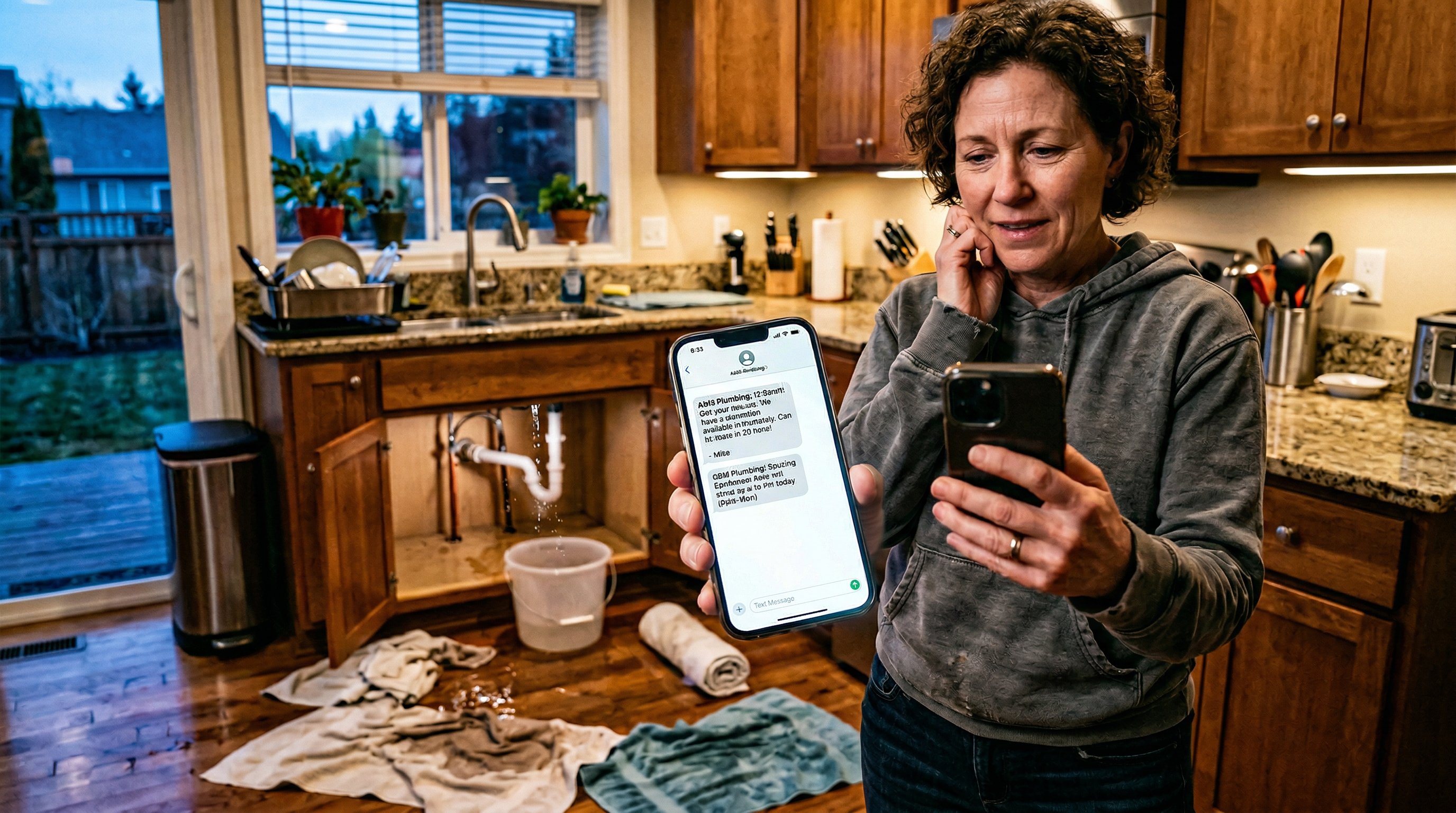
Homeowners usually don't have perfect information. They use simple signals to decide who to talk to first: who answered, who texted back, who sounded clear, and who made booking easy. In practice, the first contractor to respond often gets the first appointment, and the first appointment often wins the job.
That advantage compounds in high-intent situations. After wind damage, furnace failure, burst pipes, or a major remodel inquiry, urgency is high and patience is low. The homeowner isn't running a formal procurement process. They're trying to solve a problem.
When we respond first, we can ask smart qualifying questions, set expectations, and frame value before price becomes the whole conversation. That's one reason exclusive leads matter so much. At Midas Media, our focus is booked estimates, not shared-lead chaos where five contractors race to call the same person. Faster follow-up works best when the lead is actually yours to win.
The Real Cost Of Slow Follow-Up For Roofing, HVAC, Plumbing, And Remodeling Leads
Slow follow-up costs more than a missed phone call. It creates a chain reaction: lower contact rates, fewer booked estimates, weaker close rates, and more wasted ad spend. Contractors often blame lead quality when the real issue is response speed.
Take roofing. If a homeowner has storm damage and we respond two hours late, a competitor may already be on the roof. In HVAC, emergency replacement leads cool off fast once someone else schedules the visit. In plumbing, especially repipes or urgent service, delays can push people to the next available company. And in remodeling, slower follow-up signals slower project management, which is the last thing a homeowner wants on a six-figure project.
There's also margin erosion. When we respond late, we're more likely to enter the conversation as one of several bidders. Then the sale gets harder, price pressure goes up, and premium positioning weakens. Speed protects revenue and preserves pricing power.
How To Build A Speed To Lead Process Your Team Can Actually Maintain
A real speed to lead system can't depend on one office manager having a perfect day. It needs simple rules, automation where it helps, and clear ownership. The goal is consistency, not heroics.
For most contractors, the best process is straightforward: every inbound lead gets an immediate acknowledgment, a fast first touch, and a defined next step. That next step should usually be a booked call, on-site estimate, or diagnostic visit, not endless back-and-forth.
If your team is in the field, build around that reality. Use call routing, SMS, webform triggers, and calendar workflows so leads don't sit untouched while trucks are on jobsites. We've seen this matter especially in competitive local markets like Utah's Wasatch Front, where homeowners expect a digital-first experience and quick answers.
A first-touch text doesn't need to be clever, just fast and specific: "Hi Sarah, this is Mike with ABC Roofing. We just got your request about roof repair in Sandy. I can help. Are you free for a quick call, or would you like me to text over a couple estimate times?" That works because it's personal and gives the homeowner an easy next step, rather than a generic "we'll be in touch."
Beyond the first touch, most leads need more than one attempt. A practical cadence: day 0 gets an instant text, call, and email; day 1 a second call and text; day 3 a follow-up message; days 5 to 7 another call; and days 10 to 14 a final "still interested?" check-in before moving the lead to a longer-term nurture list. Stop after 5 to 7 quality touches with no response, unless the homeowner asked for later follow-up specifically.
Set Clear Response Time Targets For Calls, Forms, Texts, And After-Hours Leads
What gets measured gets managed. We recommend setting channel-specific targets instead of one vague rule.
A practical starting point looks like this:
- Calls: answer live whenever possible: missed calls returned within 5 minutes
- Web forms: text and call within 5 minutes
- Inbound texts: reply within 2 to 3 minutes
- After-hours leads: instant automated acknowledgment, human follow-up at opening or via on-call coverage for emergencies
These targets force operational clarity. Who owns missed calls? Who checks form fills? What happens on weekends? If nobody knows, leads leak.
The strongest teams also use scripts, not robotic ones, just short frameworks. Confirm the issue, location, urgency, and desired timeline. Then move quickly to booking. The contractor who makes the next step easy usually wins.
Use Automation To Qualify, Route, And Book Leads Without Delaying Human Follow-Up
Automation should compress response time, not replace human sales skill. Done right, it handles the first 30 seconds so your team can handle the next 10 minutes.
For example, an instant SMS can confirm receipt, set expectations, and ask one or two qualifying questions. Routing rules can push roofing storm leads to one rep, HVAC emergency replacements to another, and remodeling inquiries to a project consultant. Online booking can capture appointments when nobody is free to answer.
But here's the catch: automation must lead to a real person fast. Homeowners don't want to get trapped in a bot maze while their AC is dead.
This is where a stronger lead system matters. At Midas Media, we build campaigns around exclusive, high-intent contractor leads, then support them with instant SMS response systems and booking workflows so partners can move faster without sounding automated or impersonal.
Automation works best inside a real pipeline, not a loose pile of notifications. A workable structure has clear stages: new lead, contacted, appointment set, estimate sent, won, lost, and follow-up, so nothing is just sitting in an inbox. It also pays to track job value alongside lead volume, not just how many leads a channel produced. Two $25,000 roof replacements from one campaign can matter more than ten cheap tune-up calls from another, even if the second campaign's lead count looks better on paper.
How To Track Speed To Lead And Improve Close Rates Over Time
If we want to improve speed to lead for contractors, we need to track more than raw lead volume. The useful metrics are: time to first response, contact rate, booking rate, show rate, estimate rate, and close rate by source.
That data reveals where revenue is slipping. Maybe Google Business Profile leads close well when called in under 5 minutes but fall off after 15. Maybe after-hours web leads book well with instant SMS but poorly without it. Maybe your paid ads aren't the problem, your callback lag is.
We also recommend reviewing performance by job type. A concrete flatwork lead may tolerate a slower response than an emergency plumbing call, while a basement remodel inquiry might need stronger qualification before booking.
The long game is simple: faster response, better process, better close rate. And if your marketing partner is delivering exclusive territory protection, direct-to-consumer leads, and booked-estimate accountability, not vanity clicks, you can actually see the compounding payoff. Speed doesn't just help win more leads. It helps win better jobs.
The contractors who grow fastest in 2026 won't just generate demand. They'll be the ones ready to act on it immediately.