 midas media.
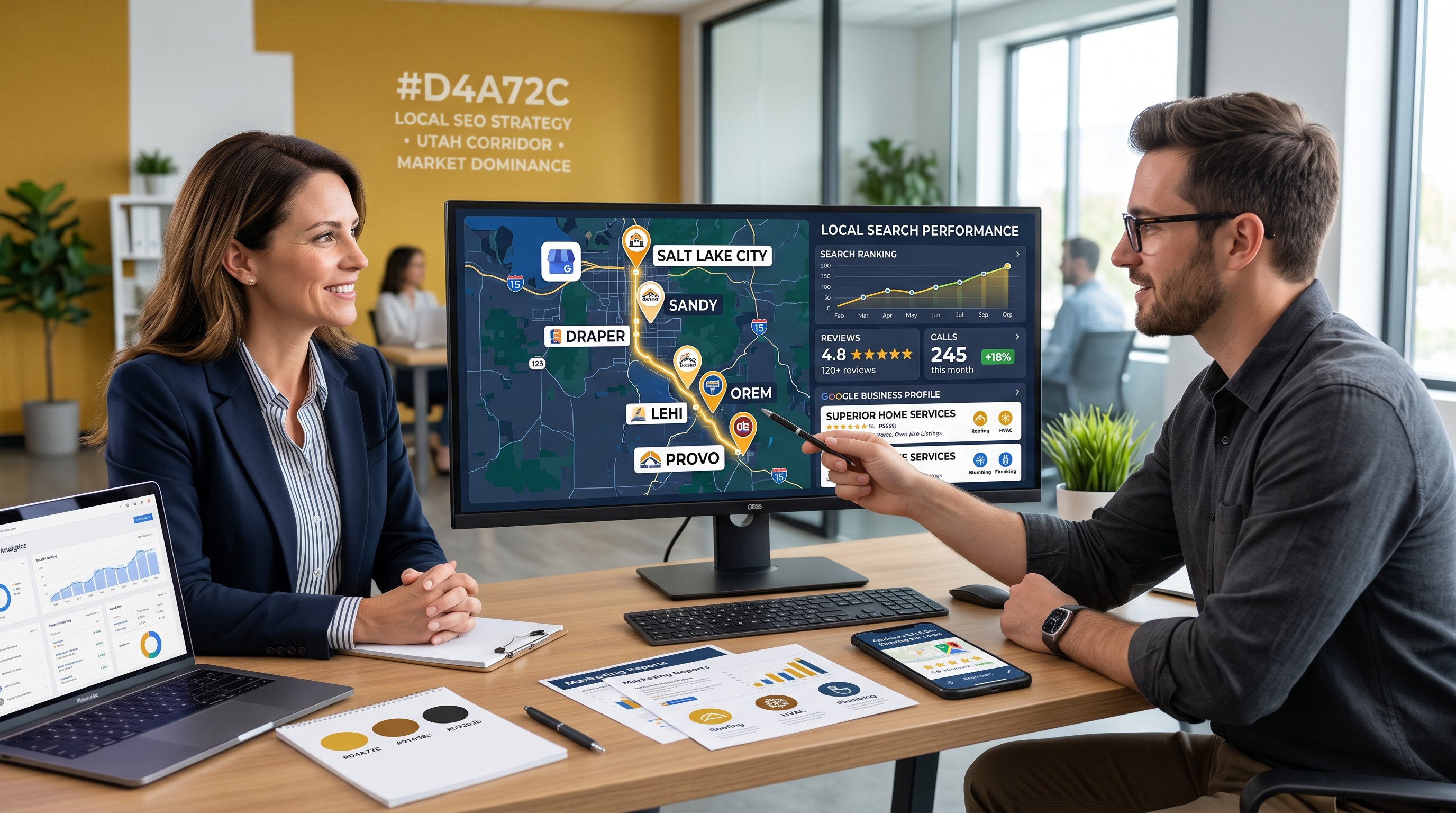
If you're a contractor working the Wasatch Front, local search isn't a side channel anymore, it's the front door to booked estimates. Homeowners in Provo, Orem, Lehi, Draper, Sandy, and Salt Lake City are searching with urgency, often on mobile, and they usually call one of the first few companies they trust. That means ranking well in local results can directly shape your pipeline. In 2026, winning local SEO takes more than tossing a city name onto a page. We need sharper targeting, stronger trust signals, and a system built for how Utah homeowners actually shop.
Why Local SEO Matters In The Provo To Salt Lake City Service Corridor
The Provo-to-SLC corridor is one connected market on paper, but not in search behavior. A homeowner in Sugar House searches differently than one in Eagle Mountain. Needs, price points, housing stock, and urgency all change by zip code.
For high-ticket trades, roofing, HVAC, plumbing, solar, remodeling, that matters. Google is trying to match local intent, not just business category. So if we want more calls, we have to show clear relevance to each service area.
Utah adds extra nuance. New-build communities in Saratoga Springs and Daybreak respond to different messaging than older neighborhoods in The Avenues. Storm damage, snow loads, clay soil, HOA restrictions, and permit expectations all shape what people type and who they trust.
That's why local SEO is more than rankings. It's market positioning. When paired with exclusive territory strategy and fast lead handling, it can reduce dependence on shared-lead platforms like Angi and put more first-party demand under your brand.
Optimize Your Google Business Profile For Maps, Reviews, And Service-Area Visibility
Your Google Business Profile is still the biggest lever in local visibility. For many contractors, it's the difference between appearing in the map pack and disappearing under bigger names.
Start with the basics: correct primary category, tightly matched secondary categories, accurate hours, service areas, photos of real jobs, and services written in plain language. Don't stuff city names into the business name. That shortcut usually backfires.
Then get more specific. Add project photos from actual cities you serve. Post updates tied to seasonal demand, AC replacements before July, roof inspections after wind events, frozen pipe prevention before cold snaps. Reviews matter too, but not just volume. We want reviews that mention service type, neighborhood, and outcome naturally.
For Salt Lake trades, market-specific positioning can help reinforce relevance, especially when your website supports it with dedicated pages like Salt Lake marketing or trade-specific campaigns such as city HVAC marketing.
And once the call comes in, speed matters. A well-optimized profile paired with instant SMS response and booking automation turns visibility into actual appointments.
Build A Location-Focused Website Strategy With Local Keywords, Service Pages, And On-Page SEO
A strong local SEO strategy needs a website built around service intent and geography. One generic "areas we serve" page won't carry a contractor across Provo to SLC anymore.
Instead, we build clusters. That means core service pages, city-specific pages, and sometimes neighborhood or problem-specific pages where demand is clear. A roofer might need pages for storm damage in Sandy, premium roof systems in Park City, and ice dam solutions in Salt Lake foothill areas. A concrete contractor may need separate pages for driveways, patios, and flatwork in distinct markets, supported by focused assets like salt lake concrete.
On-page SEO still matters: title tags, internal links, heading structure, image alt text, and local modifiers in copy. But the copy has to sound like it belongs to the area. Mention the actual homeowner concerns, HOA compliance in Daybreak, older plumbing lines in historic districts, expansion-related drainage issues in Eagle Mountain.
That specificity is what helps Google, and real people, believe you belong there.
Strengthen Trust With Consistent Citations, Reviews, And Local Schema Markup
Trust signals often separate the company that gets the click from the one that gets ignored. Citations are part of that foundation. Your name, address, phone number, and service-area details should stay consistent across directories, trade sites, and local listings.
For contractors, credibility also lives off Google. Profiles tied to recognized trust platforms like the BBB can reinforce buyer confidence, especially for bigger-ticket jobs where homeowners are comparing multiple bids.
Reviews should be steady, recent, and specific. Don't just ask for "a review." Ask customers to mention the work performed, city, and what stood out, clean crew, fast response, clear pricing, permit help, whatever was true.
Then add local schema markup to your website. At minimum, use LocalBusiness or the right service subtype, service area details, review markup where appropriate, and organization data. It won't magically rank you overnight, but it helps search engines connect your brand, locations, and services more confidently.
In local SEO, trust isn't fluffy. It's technical and visible.
Earn Local Authority Through Backlinks, Community Relevance, And Helpful Local Content
Backlinks still matter, but random directory links won't move a serious contractor in 2026. We need local authority and topical relevance.
Good local links come from chambers, suppliers, neighborhood associations, sponsorships, builders, and regional publications. If you work with property managers, HOAs, or restoration partners, those relationships can become natural link opportunities. The same goes for licensing and industry credibility: homeowners often want proof you operate professionally, and standards bodies like NASCLA help reinforce that expectation.
Helpful local content makes link building easier. Publish pages and articles that answer real Utah-specific questions: how snow load affects roofing choices, what clay soil does to flatwork, whether a remodel in Sugar House may trigger extra permitting, or how long an HVAC replacement takes during peak summer demand.
This is where brand authority compounds. Detailed local resources, case studies, and even polished jobsite videos can earn links, improve engagement, and raise conversion rates at the same time.
For plumbers expanding into competitive metro zones, a page built around city plumbing marketing should be supported by content that proves neighborhood-level expertise, not just metro-wide ambition.
Track Rankings, Leads, And Local Search Performance Across Provo To SLC
If we only track traffic, we miss the point. Local SEO for contractors should be measured by booked estimates, call quality, close rate, and cost per acquired job.
Start with local rank tracking by city or zip code, not just one average position. Your rankings in Provo can look great while you're invisible in Draper. Then tie that visibility to Google Business Profile insights, phone-call tracking, form submissions, and CRM outcomes.
We also want to know which service pages drive revenue. Sometimes a lower-traffic page attracts far better buyers. That's common in high-ticket verticals where intent matters more than volume.
Behavior data helps too. If homeowners spend time on financing pages, gallery pages, or educational resources inspired by trusted home-improvement publishers like Bob Vila, that tells us what builds confidence before the call.
At Midas Media, this is where local SEO becomes a growth system instead of a vanity project: exclusive territories, fast speed-to-lead, and market-by-market optimization that turns rankings into real jobs.
Conclusion
Contractors don't win the Provo-to-SLC market by being vaguely visible everywhere. We win by becoming the obvious local choice in the exact cities and neighborhoods we serve. That takes a sharper Google Business Profile, better city pages, stronger trust signals, local authority, and disciplined tracking. Get those pieces working together, and local SEO starts doing what it should: making your phone ring with better-fit leads.