 midas media.
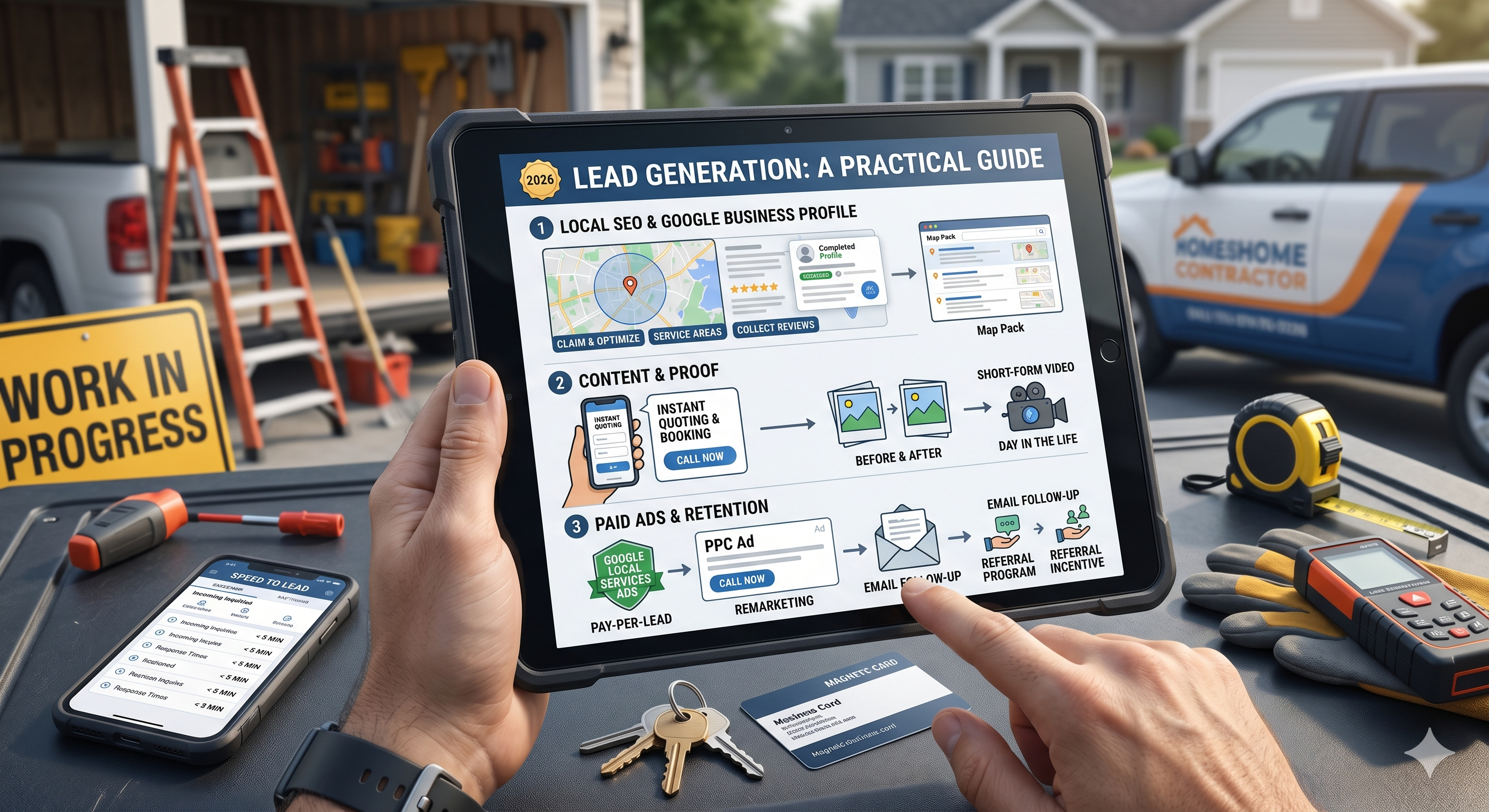
If you run a roofing, HVAC, plumbing, landscaping, solar, concrete, flooring, electrical, or remodeling company, you've probably asked it bluntly: how do I generate leads? In 2026, the answer isn't one trick or one platform. It's a system. We need the right jobs, the right local visibility, the right ad strategy, and fast follow-up once a homeowner reaches out. The contractors winning right now aren't buying random shared leads and hoping for the best. They're building predictable lead pipelines that produce qualified calls, booked estimates, and profitable jobs.
Start With The Right Lead Generation Foundation
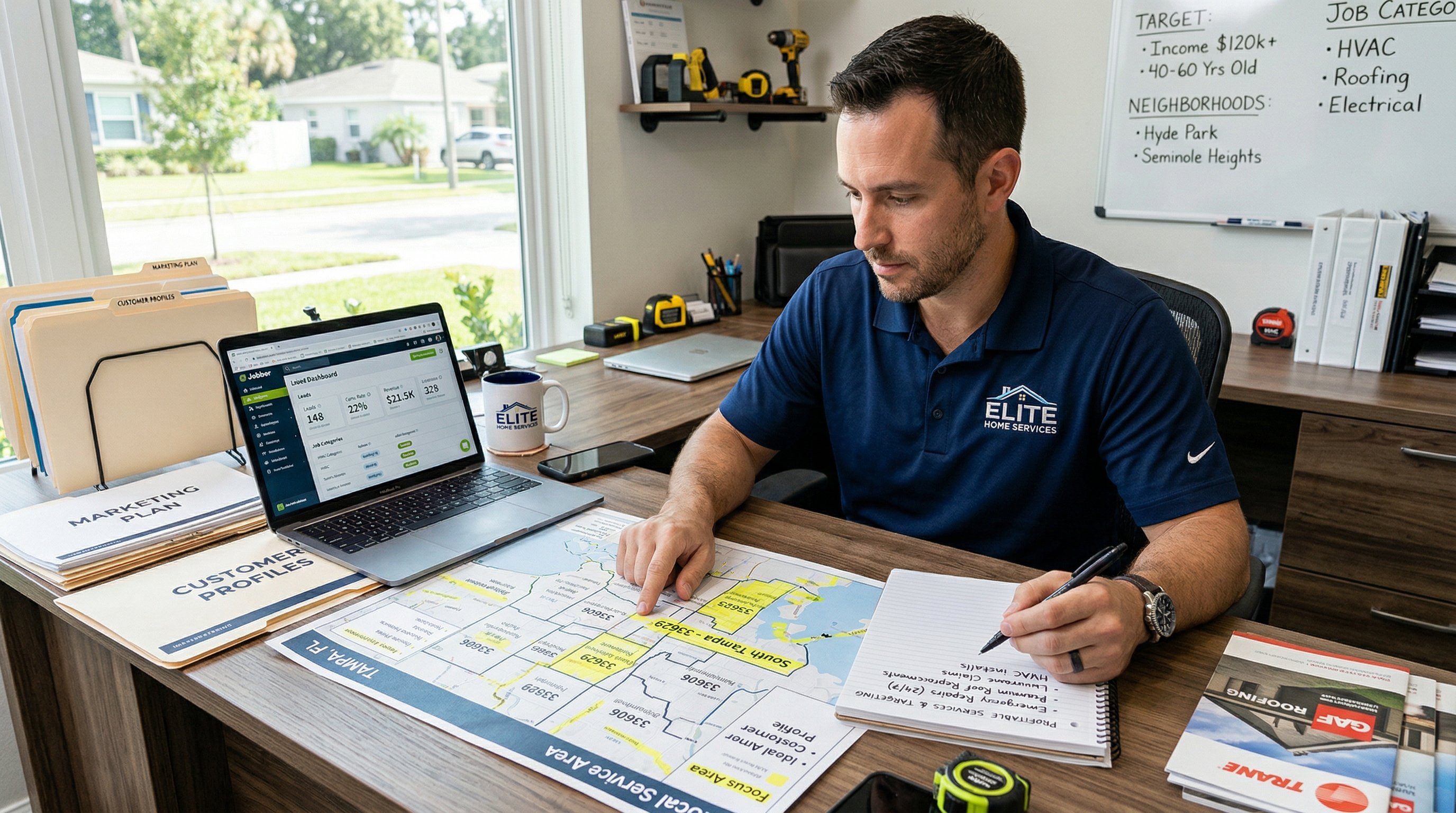
Before we spend a dollar on ads or obsess over rankings, we need clarity. A lot of contractors struggle with lead generation because they're trying to market to everyone. That usually brings in the wrong jobs, weak margins, and tire-kickers.
The better move is to decide what we actually want more of: emergency repairs, premium replacements, insurance claims, remodels, repipes, flatwork, outdoor living builds, or another profitable service line. When our offer is clear, our messaging gets sharper and our leads get better.
In home services, specificity matters. A roofer after storm damage leads shouldn't sound like a remodeler selling premium architectural systems. An HVAC company focused on replacements should market differently than one chasing tune-ups. The same goes for concrete, solar, and landscaping firms going after five- and six-figure projects.
Define Your Ideal Jobs, Service Area, And Customer Profile
We start by defining three things:
- Ideal jobs: the services with the best margins and strongest close rates
- Service area: the exact cities, zip codes, or neighborhoods we want to dominate
- Customer profile: the homeowner most likely to buy now and buy at a profitable price
This is where local nuance pays off. In Utah, for example, messaging in Daybreak or South Jordan may need to reference HOA compliance and clean job sites. In Park City, roofers may emphasize snow loads, canyon winds, and premium engineered solutions. In historic areas like Sugar House or the Avenues, remodeling and exterior contractors may need to highlight restoration expertise and permit familiarity.
The more precise we are here, the easier every other lead generation channel becomes.
Build A Website That Turns Traffic Into Calls And Form Fills
A website shouldn't be a digital brochure. It should function like a salesperson who never takes a day off. If homeowners land on the site and can't quickly tell what we do, where we work, and why they should trust us, conversions drop fast.
For high-ticket home service contractors, the homepage needs a clear headline, strong service-area signals, proof of credibility, and obvious next steps. That means click-to-call buttons, short quote forms, financing information if relevant, and real project photos instead of generic stock imagery.
Service pages matter too. Each core service should have its own page written around local search intent and buyer concerns. A plumbing page about whole-home repiping should not be buried inside a general plumbing paragraph. A concrete contractor targeting basement finishes or flatwork needs dedicated pages that speak directly to those jobs.
And speed matters more than most owners realize. If the site loads slowly on mobile, we lose people. Many homeowners are searching with a broken AC unit, a leaking pipe, or a storm-damaged roof. They're not patient.
We've also seen strong gains from adding online booking, SMS-first contact options, review highlights, and short crew videos. Trust is a conversion lever. People want to know who they're inviting onto their property.
Use Local SEO And Google Business Profile To Capture High-Intent Searches
Local SEO is still one of the highest-ROI channels for contractors because it captures people already looking for help. These are not passive browsers. They're typing searches like "roof repair near me," "AC replacement Lehi," or "concrete contractor Saratoga Springs." Intent is the whole game.
Our first priority is usually Google Business Profile. A fully optimized profile with accurate categories, service areas, photos, reviews, and regular updates can drive calls without the homeowner ever visiting the website. That's especially true in the map pack.
Then we support it with local landing pages, review generation, on-page optimization, internal linking, and citations that reinforce name, address, phone, and service consistency. We also publish useful local content when it supports real search demand.
For example, a roofing company in Utah can build pages around storm response, heavy snow load systems, or wind-rated solutions. A landscaping or solar contractor can target affluent neighborhoods where larger project values are common. A concrete company can create pages around unfinished basements, drainage issues, and structural concerns in fast-growth areas.
This is also where hyper-local strategy beats generic SEO. We don't want to "rank everywhere." We want to dominate the neighborhoods that produce the best jobs. That focus is often what separates a busy contractor from one constantly chasing the next lead source.
Run Paid Ads That Prioritize Exclusive, Qualified Leads
Paid ads work well when we treat them like a precision tool, not a slot machine. Too many contractors burn money on broad campaigns, weak targeting, and vanity metrics like impressions or cheap clicks. None of that pays the crew.
What matters is generating qualified leads from homeowners in the right service area who need the services we actually want to sell. That usually means tight keyword targeting in Google Ads, strong negative keyword lists, geographic controls, call-focused landing pages, and messaging that filters out low-intent shoppers.
Exclusivity matters too. Shared leads from big aggregators often create a race to the bottom. The homeowner fills out one form, then five contractors call. At that point, price becomes the conversation. That's not where premium contractors win.
A better model is direct-to-consumer lead generation where every inquiry belongs to one business. That's a big reason firms like Midas Media position around exclusive territory protection and a one-partner-per-market approach. If a campaign owns a market, the leads aren't getting resold to local competitors.
In 2026, we also like multi-platform paid campaigns that run continuously, then shift budget toward what books estimates, not just what generates clicks. Good ad strategy should create predictability, not drama.
Create A Fast Follow-Up System So More Leads Become Booked Estimates
A surprising number of "bad leads" are really slow follow-up problems. If we respond 20 minutes later while the homeowner is still calling around, we've already made life harder for ourselves. Speed to lead is no longer optional.
The best contractors respond in minutes, not hours. That usually requires a system: instant text confirmation, missed-call text back, CRM notifications, call routing, and someone accountable for contacting every lead until they're booked or disqualified.
This is where automation helps without replacing the human touch. We can send immediate SMS replies, offer online scheduling, and trigger reminder sequences while still having the office or sales rep step in quickly. Homeowners expect convenience now, especially in digital-first markets.
A simple follow-up framework works well:
- Respond immediately by call and text
- Confirm the service need and location
- Pre-qualify for budget, timeline, and job fit
- Offer a clear next step: inspection, estimate, or consultation
- Keep nurturing no-response leads for several days
When this is done right, lead quality appears to improve because fewer opportunities slip through the cracks. The contractors who win aren't always the ones with the most leads. Often, they're the ones who handle inbound demand fastest and most consistently.
Track Cost Per Lead, Close Rate, And ROI To Improve Results
If we can't measure lead generation, we can't really improve it. And in home services, the wrong numbers can be misleading. Cheap leads are not the goal. Profitable jobs are.
At minimum, we should track:
- Cost per lead (CPL): what we pay to generate each inquiry
- Booking rate: how many inquiries turn into estimates or appointments
- Close rate: how many booked estimates become sold jobs
- Average job value: the revenue per sale
- Return on investment (ROI): what we make compared with what we spend
This is how we spot what's actually working. Maybe one campaign has a higher CPL but produces premium replacements with strong margins. Another may look efficient on paper but bring in low-value work that clogs the schedule.
We also need channel-level visibility. Calls from Google Business Profile, form fills from SEO pages, and booked estimates from paid ads should all be tracked separately. Otherwise, we can't make smart budget decisions.
The strongest lead generation systems are built on feedback loops. We launch, track, refine, and scale. That's how serious contractors move from inconsistent lead flow to a market position where the pipeline feels dependable.
And if we want to stop relying on shared-lead platforms, this discipline is non-negotiable. Owning the data is part of owning the growth.
The short answer to "how do I generate leads?" is this: build a system, not a gamble. Get clear on your best jobs, strengthen your website, win local search, run tightly targeted ads, follow up fast, and track what produces revenue. When those pieces work together, lead generation stops feeling random, and starts becoming scalable.