 midas media.

Most contractors don't have a lead problem. They have a follow-up problem. We've seen it over and over: a company buys more traffic, spends more on ads, and still wonders why booked estimates stay flat. Meanwhile, the real leak is happening after the phone rings or the form comes in. In 2026, contractor lead follow-up is where jobs are won or lost, especially in high-ticket trades where homeowners move fast and compare options quickly. If we want better close rates, we need a system that responds fast, sounds human, and keeps momentum going all the way to the estimate.
Why Lead Follow-Up Matters More Than Lead Volume
More leads won't fix a weak sales process. If we're slow to reply, inconsistent with outreach, or casual about missed calls, extra lead volume just creates more waste.
That's especially true for roofing, HVAC, plumbing, electrical, remodeling, solar, landscaping, flooring, and concrete jobs where the ticket size is high and the buying window can be short. A homeowner with a leaking roof, failed AC, or urgent plumbing issue usually isn't waiting around for us to "circle back tomorrow." They're calling the next contractor.
The better play is simple: squeeze more revenue out of the leads we already have. Improving contractor lead follow-up often boosts booked estimates faster than increasing ad spend. A company converting 20% of inbound leads can often grow more profitably by tightening response times and follow-up cadence than by buying another 50 leads.
At Midas Media, that's a big part of our philosophy. Exclusive leads matter, yes, but exclusive leads only pay off when they're handled like revenue opportunities, not inbox clutter.
How Speed To Lead Impacts Booking And Close Rates
Speed to lead is one of the clearest advantages a contractor can control. The first company to respond often becomes the company that sets the tone, earns trust, and books the estimate.
In practical terms, that means aiming for a response in minutes, not hours. Five minutes is strong. Fifteen is still workable. Two hours? We're already behind. By then, the homeowner may have spoken with two other companies and mentally moved on.
Why does this matter so much? Because fast responses signal professionalism. Homeowners read speed as competence: if we're quick now, they assume we'll be organized on the job too.
This is also where automation helps without replacing the human touch. Instant text acknowledgment, missed-call text back, and online booking links can bridge the gap while our team is in the field. That's why 2026 systems lean heavily on AI-powered speed to lead. At Midas Media, we build around that reality because a lead that waits is a lead that cools off.
The Best Contractor Lead Follow-Up Process From First Contact To Estimate
A solid follow-up process should be repeatable, fast, and dead simple for the team to execute.
Here's a practical framework:
- Respond immediately. If the lead calls, answer live whenever possible. If they fill out a form, send an instant text and email confirmation.
- Call within 5 minutes. Even if automation fires first, a real person should try to connect quickly.
- Qualify briefly. Ask about the project type, timeline, location, and urgency. Don't turn the first call into an interrogation.
- Book the estimate. The goal is not a full consultation on the spot. The goal is the next step.
- Confirm in writing. Send date, time, who's coming, and what happens next.
- Remind before the appointment. A text the day before and another a few hours before cuts no-shows.
- Follow up after the estimate. If they don't sign immediately, stay present.
That process sounds basic, and that's the point. The best contractor lead follow-up systems are boring in a good way. They happen every time, whether we're handling 20 leads a month or 200.
What To Say In Calls, Texts, And Emails Without Sounding Pushy
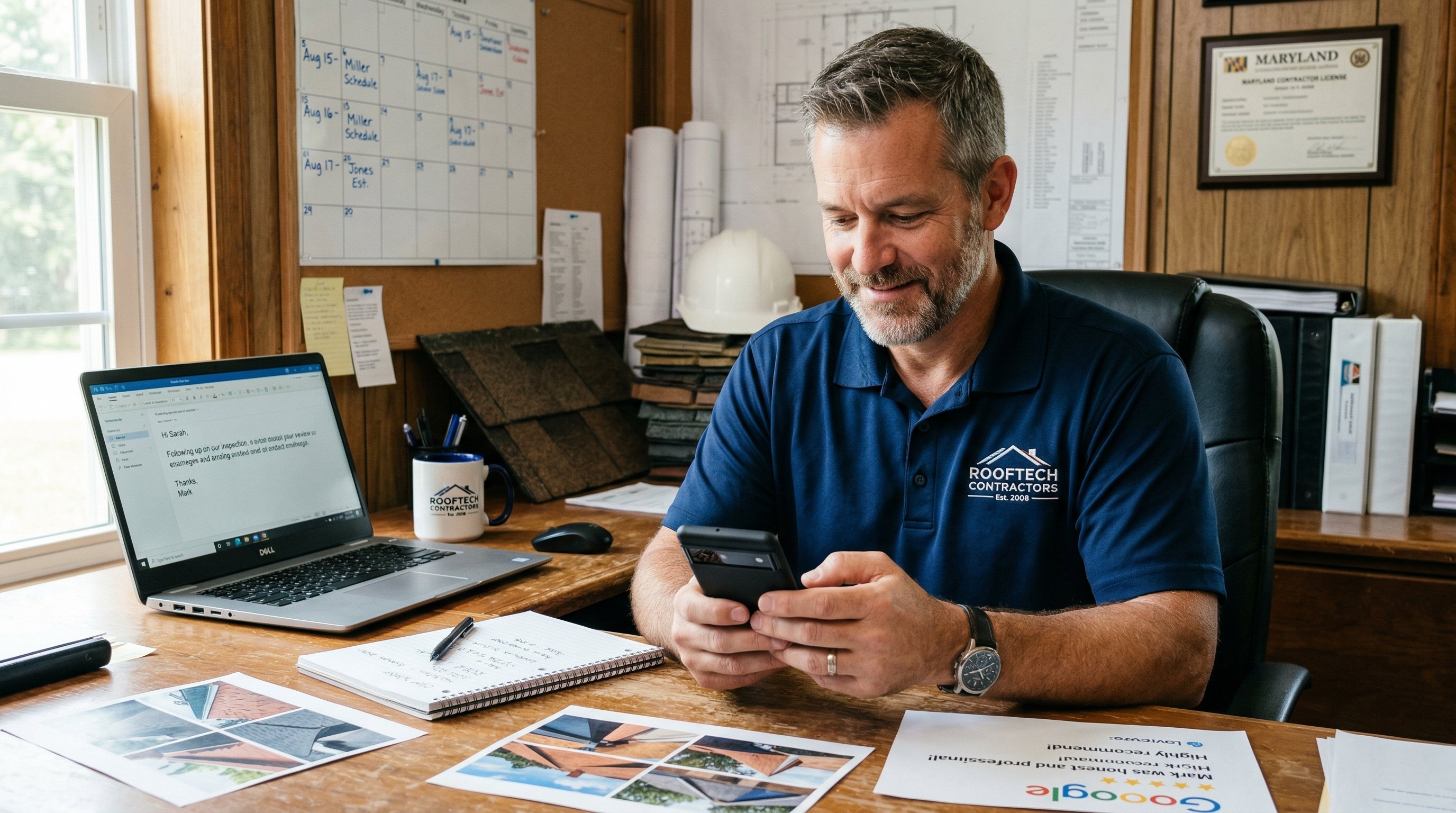
Most contractors don't lose leads because they're too aggressive. They lose them because their messaging is vague, delayed, or forgettable.
A good first text can be as simple as:
"Hi Sarah, this is Mike with ABC Roofing. We just got your request about roof repair in Sandy. I can help. Are you free for a quick call, or would you like me to text over a couple estimate times?"
That works because it's clear, personal, and easy to respond to.
On calls, we want to sound calm and useful, not scripted. Try: "Thanks for reaching out. I just want to get a quick sense of the project and then we can get you scheduled." That lowers pressure.
For email, keep it short. Confirm the request, reinforce credibility, and offer one next step. Long emails rarely book jobs.
And one more thing: don't "check in" with no value. Follow-up should move the conversation forward. Share an opening, answer a question, explain the process, or provide proof like photos, reviews, or financing details.
How Often To Follow Up And When To Stop
Most leads need more than one touch. Sometimes a lot more. Homeowners get busy, compare quotes, forget to reply, or mean to call back and never do.
A practical cadence looks like this:
- Day 0: Instant text, call, email
- Day 1: Second call and text
- Day 3: Follow-up text or email
- Day 5–7: Another call
- Day 10–14: Final "still interested?" message
If they've had an estimate already, the cadence can stretch longer, especially for remodeling, solar, landscaping, flooring, or concrete projects where decisions take time.
When should we stop? Usually after 5 to 7 quality touches with no response, unless the lead explicitly asks for later follow-up. Then put them in a longer-term nurture list.
The key is persistence without annoyance. If every message sounds identical, it feels robotic. If each touch has a reason, it feels professional. Big difference.
Common Follow-Up Mistakes That Cost Contractors Good Leads
A few mistakes show up constantly.
Waiting until the end of the day to return leads. By then, the opportunity is usually gone.
Treating every lead the same. An emergency plumbing call should not get the same response pace as a long-range patio project.
Failing to answer missed calls. Missed-call text back should be standard now, not optional.
Talking too much on first contact. We don't need to explain our whole company history before booking the estimate.
No CRM or tracking. If we rely on memory, sticky notes, and "I thought somebody called them," leads fall through the cracks.
Buying shared leads and expecting loyalty. When five contractors get the same inquiry, speed and price pressure take over. That's one reason exclusive lead generation matters so much. Midas Media's one-partner-per-market model is built to avoid that race entirely.
And maybe the biggest mistake of all: blaming lead quality before auditing follow-up quality. Sometimes the lead wasn't bad. Our process was.
Conclusion
If we want more booked estimates and higher close rates, contractor lead follow-up has to become a system, not a guessing game. Faster responses, tighter messaging, and consistent persistence win jobs. And when those leads are exclusive instead of shared, the upside gets even bigger. That's the standard we build around: real inquiries, fast follow-up, and a process that keeps crews busy.