 midas media.

If you've ever paid for a contractor answering service and still watched good leads slip through, you're not imagining it. Traditional answering services can keep the phone from ringing endlessly, but they often fall short where revenue really lives: qualifying urgency, booking estimates, and converting high-intent homeowners before they move on. In 2026, the better question isn't just "Who can answer our calls?" It's "What system helps us capture, respond to, and book more profitable jobs?" For roofing, HVAC, plumbing, remodeling, and other high-ticket trades, the best alternative usually combines speed, context, and ownership of the lead.
Why Contractors Start Looking Beyond Traditional Answering Services
Most contractors don't replace an answering service because calls aren't being answered. We replace it because too many answered calls don't turn into booked work.
A generic service can take messages, but that's different from handling a panicked no-heat HVAC call at 9:30 p.m. or recognizing that a roofing inquiry after a windstorm may be worth thousands. In high-ticket home services, context matters. So does speed.
The common issues are familiar:
- agents who don't understand the trade
- weak qualification on budget, urgency, or service area
- no real scheduling integration
- slow callbacks that let competitors win
- little visibility into which calls become revenue
And then there's the bigger problem: many contractors are solving the wrong bottleneck. Missed calls matter, yes. (If you want to plug this leak immediately, you can grab our free missed call text-back snapshot and guide to instantly automate your text follow-ups). But if your lead source is weak, your answering service won't save you. We've seen the strongest growth come from building a full lead capture system, better traffic, faster response, stronger booking, and exclusive opportunities instead of recycled ones.
What To Look For In A Better Lead Capture Solution
A real contractor answering service alternative should do more than pick up the phone. It should help us protect revenue at every step.
At minimum, we want five things.
1. Fast response across channels
Homeowners don't just call. They text, fill out forms, and start chats. A better solution responds instantly across all of them.
2. Trade-specific qualification
A plumbing emergency, a solar consultation, and a $75,000 basement finish are not the same lead. The system should route and qualify accordingly.
3. Booking, not message-taking
If the "answer" is just, someone will call you back, conversion drops. We want direct scheduling or at least immediate handoff.
4. CRM and dispatch integration
Your team shouldn't re-enter every lead manually. Good systems sync with field service software, calendars, and follow-up automations.
5. Clear ROI tracking
We should know which calls turned into estimates, sold jobs, and actual revenue.
That's the standard now. In competitive markets, lead capture is an operations issue, not just a receptionist issue.
In-House Reception And CSR Teams For Higher-Value Jobs
For many contractors, the best alternative is still human, but in-house and properly trained.
An internal receptionist or CSR team usually performs better when the average job value is high and the sales process is nuanced. Think remodeling, custom concrete, premium roofing systems, electrical upgrades, or whole-home repipes. These leads need someone who knows how to ask the right follow-up questions and represent the brand well.
The upside is obvious:
- stronger brand voice
- better service-area filtering
- smoother coordination with sales and field teams
- higher booking rates on complex jobs
The downside? Cost, training, turnover, and limited after-hours coverage.
That's why many larger home service companies use in-house staff during business hours and layer in automation or overflow support after hours. If your closing team depends on lead quality more than sheer volume, this can be the highest-converting setup. It's not the cheapest option, but for premium contractors, cheap rarely wins the best jobs.
AI Voice And Chat Systems For After-Hours And Overflow Calls
This is where the market has changed fast. Modern AI voice and chat tools are no longer gimmicks. When configured well, they can answer common questions, collect lead details, qualify intent, send instant SMS follow-up, and even book appointments.
For contractors, that makes AI one of the strongest answering service alternatives for nights, weekends, and call spikes.
Used properly, AI can:
- answer in seconds
- capture web leads 24/7
- route emergency calls by urgency
- trigger text confirmations immediately
- reduce missed opportunities when crews are in the field
Free Resource: If you use GoHighLevel (GHL) and want to stop losing money to unanswered phone calls right away, you can download our Free Missed Call Text-Back Snapshot & Guide to instantly save missed opportunities when your team is busy or out in the field.
But there's a catch: bad AI is worse than voicemail. If it sounds robotic, misses trade-specific questions, or traps homeowners in a loop, trust evaporates.
We've found the best results come when AI handles first response and triage, then hands qualified leads to a real person or booking pipeline. That's especially effective in digital-first markets where homeowners expect instant replies, online scheduling, and no waiting until Monday morning.
Dedicated Call Center Support Built For Home Service Booking
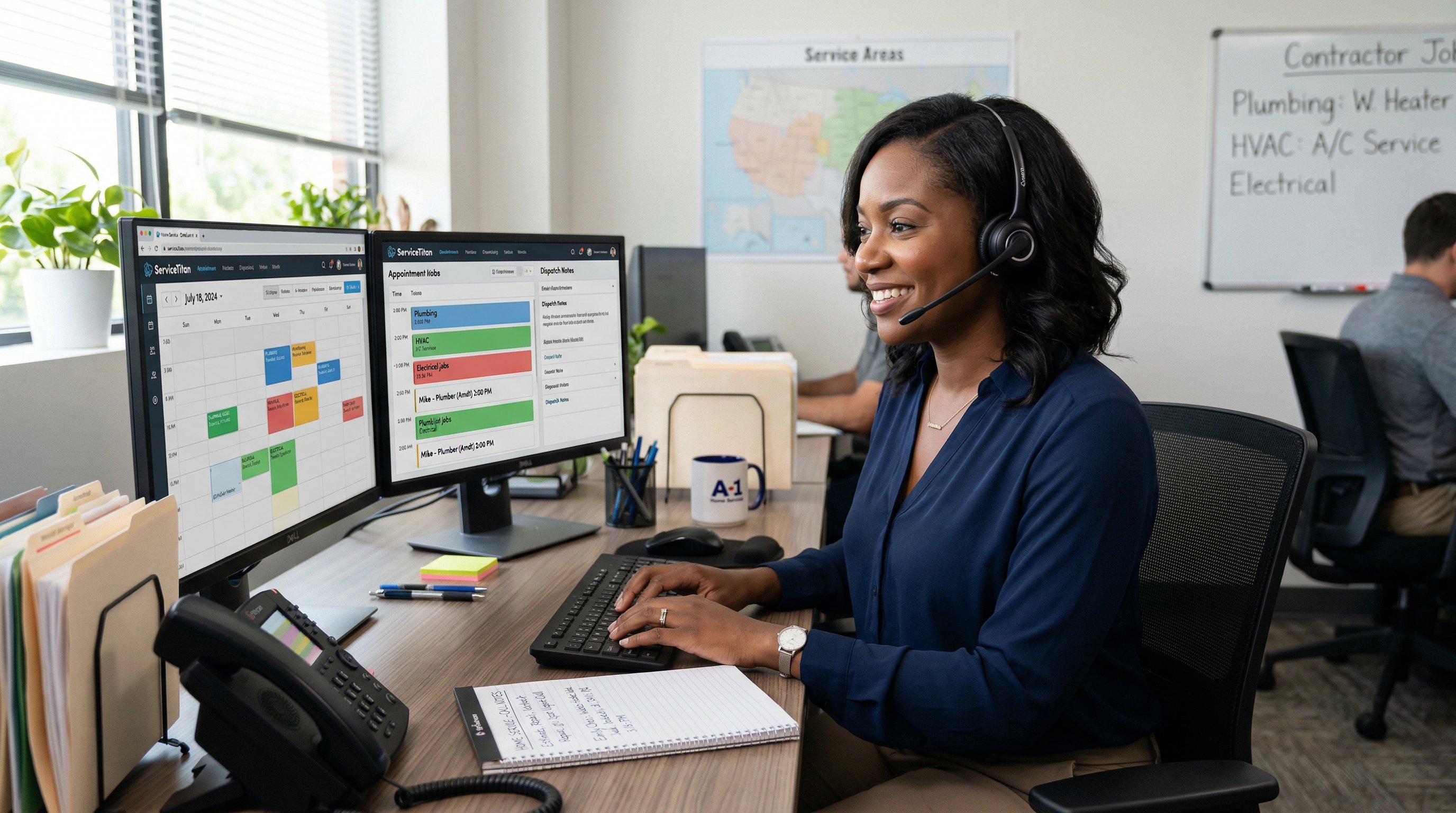
A dedicated home service call center sits between a generic answering service and a fully in-house team. And for many growing contractors, that's the sweet spot.
The key word is dedicated. Not every call center is built for contractor lead conversion. The better providers train agents on dispatch logic, service categories, urgency levels, and how to move calls toward booked estimates instead of vague messages.
This model can work well if you:
- have inconsistent call volume
- need weekend and overflow coverage
- want more professionalism without building a full CSR department
- operate across multiple service lines or territories
Still, we need to vet these providers carefully. Ask how they handle booking, what scripts they use, whether calls are recorded, and how they measure conversion. If they can't speak clearly about booking rate, speed to answer, and integration with your systems, that's a warning sign.
A call center should feel like an extension of your front office, not a stranger answering your phones.
Lead Generation Systems That Deliver Exclusive Calls Instead Of Shared Opportunities
Sometimes the smartest contractor answering service alternative isn't another answering layer at all. It's fixing the lead source.
If we're buying shared leads from aggregators, the problem usually starts before the phone rings. By the time that "lead" hits your team, four or five competitors may already be calling. That creates a speed contest and, worse, a pricing war.
Exclusive lead generation changes the equation. Instead of fighting over the same homeowner, we build systems that make your company the first and only call. That can include local SEO, Google Business Profile optimization, micro-targeted paid ads, landing pages, instant SMS follow-up, and online booking.
That's the model we believe in at Midas Media: one partner per market, exclusive territory protection, and a focus on booked estimates rather than vanity metrics. For high-ticket contractors, that matters. A roofing company after a storm, an HVAC replacement team during peak season, or a plumbing company targeting emergency repipes doesn't need more shared opportunities. It needs direct-to-consumer demand it owns.
Done right, exclusive lead systems reduce dependence on answering services because better leads arrive warmer, faster, and easier to book.
Conclusion
The best contractor answering service alternative depends on where your bottleneck really is. Some companies need trained in-house CSRs. Others need AI for after-hours coverage, a dedicated call center, or a stronger exclusive lead engine altogether. The goal isn't just answering more calls, it's capturing and booking more profitable jobs. In 2026, the contractors who win are the ones who own the lead, the response time, and the customer relationship.