 midas media.
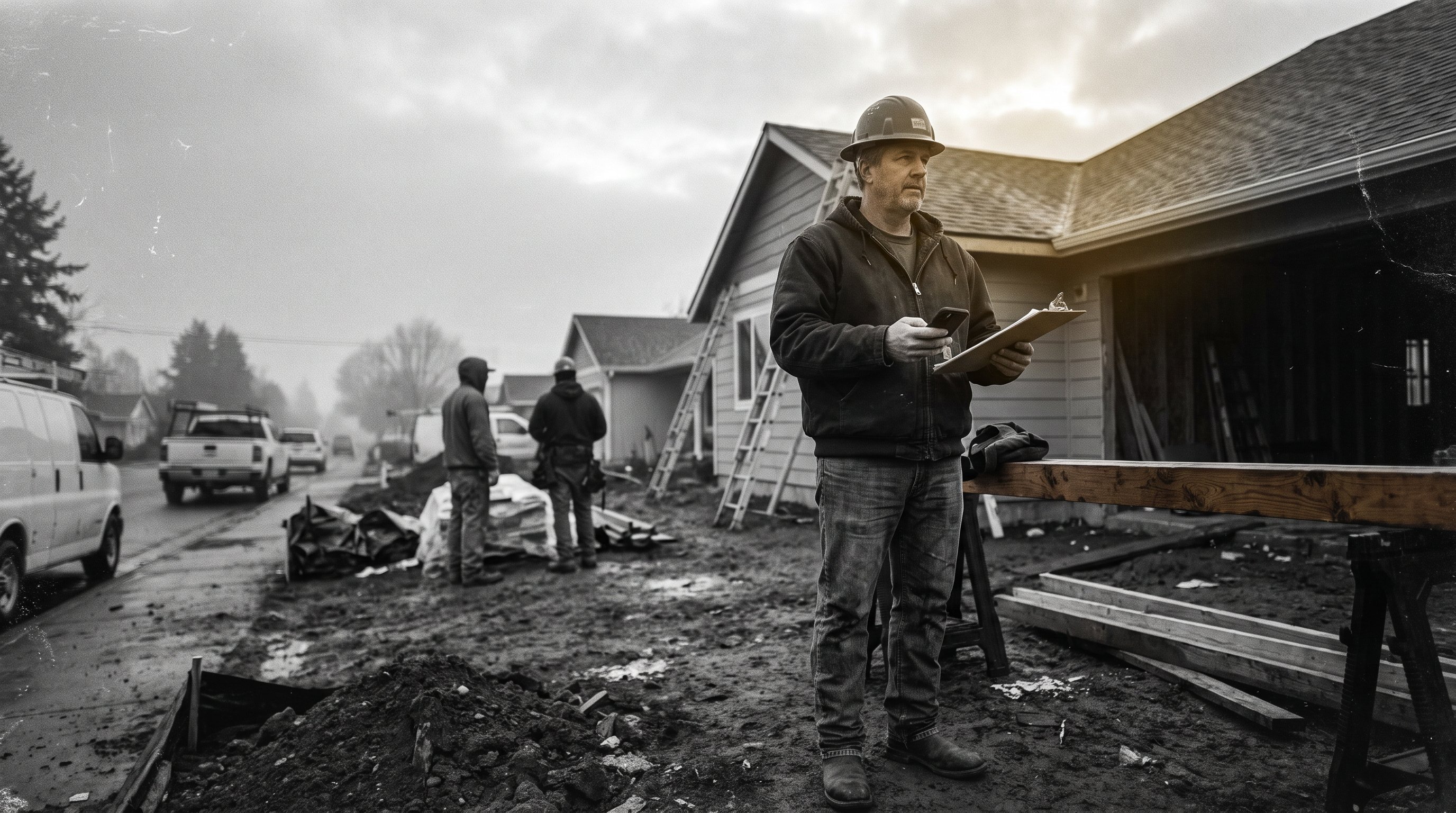
For a contractor selling a $10,000 roof, a $20,000 HVAC replacement, or a $75,000 basement renovation, marketing isn't about collecting the most phone numbers. It's about creating profitable, qualified opportunities, and knowing exactly what each opportunity costs. That's where the Angi vs. Meta Ads debate gets interesting. Angi can put your business in front of homeowners who are already requesting service, but its shared-lead model may leave you competing with several contractors at once. Meta Ads require better strategy and follow-up, yet they can give us more control, stronger targeting, and ownership of the customer relationship. Here's how the two platforms compare for high-ticket home service businesses.
How Angi And Meta Ads Generate Contractor Leads
Angi and Meta Ads both generate inbound opportunities, but they do it in fundamentally different ways.
Angi, formerly associated with Angie's List and HomeAdvisor, works largely as a paid marketplace. A homeowner submits a request for roofing, plumbing, HVAC, remodeling, or another service. Angi then matches that request with multiple contractors. You may be charged for the lead whether the homeowner answers, hires someone else, or never had a serious project in the first place.
Meta Ads, which run across Facebook and Instagram, interrupt the homeowner's normal browsing experience with a targeted offer. Instead of waiting for someone to visit a contractor directory, we can reach homeowners by location, homeowner status, interests, demographics, and behavior. A campaign might promote emergency HVAC replacement in Lehi, HOA-friendly landscaping in Daybreak, or unfinished-basement renovations in Eagle Mountain.
That distinction matters. Angi rents access to demand inside its marketplace. Meta helps us build a direct channel to homeowners, and, with the right tracking, a reusable audience for future campaigns.
Angi Leads: Advantages, Costs, And Shared-Lead Challenges

Angi's biggest advantage is convenience. Contractors don't have to build an audience, produce much creative, or develop an elaborate funnel before receiving inquiries. For a brand-new company with no reviews, limited ad-management experience, and an empty schedule, that simplicity can be useful.
The tradeoff is control. A single homeowner request may be distributed to several contractors, sometimes three, five, or more. We're then racing to call first, quote quickly, and defend our price against competitors who received the same information. That's a difficult position for high-ticket contractors, especially when the homeowner is still researching rather than ready to buy.
Costs can also be unpredictable. Depending on the trade, market, and service type, Angi may charge per lead, add advertising or membership costs, or prioritize placement based on the plan. Bot inquiries, duplicate requests, poor-fit projects, and unreachable homeowners can make a seemingly reasonable cost per lead much less attractive.
Angi may work for cleaning, handyman, painting, and smaller projects where speed and volume matter. But for roofing, major remodeling, solar, concrete, and HVAC replacements, shared leads can quickly become expensive. We're not just paying for a contact, we're paying for an opportunity that may be auctioned to our competitors.
Meta Ads: Targeting, Creative, And Retargeting Opportunities

Meta Ads don't automatically produce perfect leads. In fact, broad campaigns with weak creative often generate low-intent form fills. The platform becomes powerful when we treat it as a complete marketing system rather than a button we press to "boost" a post.
First, targeting helps us narrow the market. We can focus on specific zip codes, service areas, homeowner audiences, and project types. A solar campaign can speak to long-term energy savings. A landscaping campaign can showcase a high-end outdoor living project. A roofer near Park City can highlight snow-load engineering, ice-dam protection, and wind-rated materials instead of competing on the cheapest shingle replacement.
Creative does much of the selling. Before inviting a contractor into their home, homeowners want evidence of professionalism. Job-site videos, before-and-after photos, customer testimonials, financing information, and clear offers can make an unfamiliar company feel credible. For high-ticket services, that trust-building step is essential.
Retargeting is another major advantage. We can show follow-up ads to people who watched a video, visited a landing page, opened a form, or interacted with the company's social profile. Angi may help generate a one-time inquiry, but Meta allows us to keep marketing to an audience we've built. The lead, pixel data, customer list, and brand awareness remain valuable business assets.
Angi Vs. Meta Ads: Comparing Lead Quality, Cost, And Control
The right comparison isn't simply "Which platform delivers more leads?" It's "Which platform delivers profitable booked jobs at a cost we can sustain?"
Angi can produce immediate inquiries, but shared distribution reduces exclusivity. If four contractors receive the same roofing request, our close rate may depend more on response speed and price than on reputation or expertise. That can push good companies toward discounting, a poor strategy when labor, materials, insurance, and overhead continue to rise.
Meta usually gives us more control over the offer, audience, geography, and follow-up. Its leads may be less ready than an Angi user who has just submitted a service request, but the lower acquisition cost and exclusive relationship can create better economics. For illustration, a $600 monthly Angi budget might generate several jobs but still produce a high cost per booked job after wasted contacts and competition. A carefully managed Meta campaign may generate more inquiries at a lower cost, provided the contractor answers quickly and qualifies them well.
Results vary by market, offer, season, creative quality, and sales process. Meta isn't magic, and Angi isn't automatically worthless. But, for an established contractor with reviews, strong work samples, and a capable sales process, the control and ownership of Meta often outweigh Angi's convenience.
At Midas Media, our approach is built around exclusive, direct-to-consumer lead generation rather than shared marketplace inquiries. We protect one contractor per market, so a campaign serving an HVAC company in Utah County isn't simultaneously feeding that company's local competitors. Our goal is booked estimates, not impressive click or lead totals.
How To Track Conversion Rates And Marketing ROI
We should never judge Angi or Meta by cost per lead alone. A cheap lead that never answers is not cheap. A more expensive inquiry that becomes a $15,000 project may be an excellent investment.
Track each source through the complete sales process:
- Cost per lead: What did the platform and management actually cost?
- Contact rate: How many leads did we reach?
- Qualification rate: How many matched our service, location, budget, and timeline?
- Appointment rate: How many booked an estimate or consultation?
- Close rate: How many became paying customers?
- Cost per booked job: Total marketing spend divided by closed jobs.
- Revenue and profit: What did those jobs contribute after labor, materials, and overhead?
A call-tracking number, CRM, UTM parameters, and properly configured Meta Pixel or Conversions API can connect ad activity to actual revenue. We should also record why leads were lost: price, timing, bad contact information, out-of-area request, competitor, or no response.
For high-ticket contractors, a simple spreadsheet is better than guessing. If Angi produces 20 inquiries but only one profitable job, while Meta produces 12 inquiries and three profitable jobs, Meta is winning, even if its cost per lead looks higher.
We recommend testing both channels for a defined period when Angi is a major source of revenue. Run Meta in parallel for roughly 60 days, measure booked estimates and gross profit, then shift budget based on evidence rather than platform promises.
Which Advertising Platform Is Right For Your Contracting Business?
Angi may be appropriate when we're brand-new, have little online presence, and need a passive source of inquiries immediately. It can also supplement other channels in a market where the numbers are proven. But we should understand the ceiling: shared leads, inconsistent intent, rising fees, and limited ownership of the customer relationship.
Meta Ads are generally a better long-term fit for contractors who want to build a recognizable local brand and control their growth. They're especially useful for businesses selling projects that require education and trust, including solar, basement finishing, concrete, landscaping, roofing systems, whole-home repiping, remodeling, and HVAC replacements.
The campaign must be specific. "Need a contractor?" is weak. "Upgrade your unfinished basement in Utah County with a design-build estimate" is stronger. So is an offer tailored to Park City snow loads, South Jordan HOA requirements, or historic-home restoration in Salt Lake City's Avenues.
We also need the infrastructure behind the ads: a fast landing page, professional proof, instant SMS response, online booking, and disciplined sales follow-up. A lead-generation campaign can't rescue a company that takes two days to return calls.
For contractors who want exclusive territory protection and a managed system, Midas Media builds campaigns around the market, trade, and project value. We operate on a one-partner-per-market model and target a baseline of 50-plus exclusive leads per month, with performance guarantees tied to agreed targets. That structure is very different from paying for the same homeowner inquiry as several competitors.
Conclusion
Angi can fill gaps, but for many established contractors, its shared-lead economics make it a costly place to build a business. Meta Ads offer more control, better targeting, retargeting, and ownership of the customer relationship, provided we manage the campaign and follow-up properly.
The smartest move is to measure booked jobs and profit, not lead volume. Test Meta alongside Angi, track the full funnel, and move budget toward the channel that creates exclusive, profitable opportunities. For high-ticket contracting, that control can make all the difference.
Frequently Asked Questions about Angi vs Meta Ads for Contractors
What is the main difference between Angi leads and Meta Ads for contractors?
Angi generates leads through a shared marketplace where multiple contractors compete for the same request, while Meta Ads use targeted campaigns on Facebook and Instagram to deliver exclusive leads directly to a contractor, offering more control and ownership of the customer relationship.
Why might Meta Ads be more cost-effective than Angi for high-ticket contracting projects?
Meta Ads often deliver a lower cost per booked job by allowing contractors to target specific audiences and build reusable customer lists, whereas Angi’s shared leads can lead to higher costs due to competition and paying for non-exclusive or low-intent inquiries.
Can Angi be a good choice for new contractors without ad management experience?
Yes, Angi provides convenience with minimal setup and is useful for contractors new to marketing or without online reviews, but its shared-lead model limits control and can become costly for large, high-value projects.
How important is follow-up and sales process when using Meta Ads?
Critical—Meta Ads require a strong follow-up system, fast response times, and well-qualified lead handling to convert inquiries into booked jobs, maximizing the lower acquisition costs and exclusive leads generated.
What is a recommended strategy regarding Angi and Meta Ads for established contractors?
It’s best to run Angi and Meta Ads in parallel for about 60 days to compare actual booked jobs and profitability, then allocate budget toward the platform delivering exclusive, profitable leads with better cost-per-job metrics.
How does Midas Media ensure exclusive leads and territorial protection for contractors?
Midas Media operates on a one-partner-per-market model with aggressive performance guarantees, delivering 50+ exclusive leads monthly and legally protecting contractors from local competition receiving the same leads, ensuring no shared-lead auctions.