 midas media.

Most contractors don't need more software. We need fewer bottlenecks, faster follow-up, and better jobs on the board. That's where AI for contractors is actually useful in 2026. Not as a gimmick, and not as a replacement for sales reps, office staff, or estimators, but as a force multiplier. Used well, AI helps us respond faster, sort serious buyers from tire-kickers, tighten operations, and protect margins. For high-ticket home service businesses, that speed matters. Homeowners expect instant answers, and the contractor who responds first often gets the estimate.
What AI Means For Contractors And Where It Fits In Daily Operations
AI for contractors is best understood as a practical layer that helps us make faster decisions and automate repeatable work. Think of it less like a robot running the company and more like a smart assistant handling the first draft, the first response, or the first sort.
In daily operations, AI fits into four places really well:
- Marketing and lead intake: answering inquiries, tagging lead quality, and routing jobs by service type
- Sales support: drafting estimate summaries, follow-up emails, and financing explanations
- Operations: helping with scheduling, dispatch logic, and capacity planning
- Customer service: confirming appointments, answering common questions, and collecting review requests
For contractors, the payoff is usually speed. A missed call during a roof leak, AC failure, or burst pipe isn't a minor issue: it's lost revenue. AI-powered speed-to-lead systems, including instant SMS and web chat, help us stay responsive while crews are in the field. That's one reason agencies like Midas Media lean so heavily into digital-first lead systems for contractors: the window to win the job is short.
How AI Helps Generate And Qualify Better Leads
Lead generation gets better when AI improves both response time and filtering.
First, AI can engage new inquiries immediately through chat, text, or form replies. That matters because homeowners searching for roofing after a wind event or HVAC replacement after a system failure usually contact multiple companies. If we reply in 30 seconds instead of three hours, we're in a stronger position before price even comes up.
Second, AI can qualify leads using rules we define. It can ask:
- Is this residential or commercial?
- Is the homeowner ready now or just researching?
- What zip code is the project in?
- Is this repair, replacement, or full remodel?
- What's the budget range?
That makes campaigns more profitable. Instead of stuffing the pipeline with low-intent forms, we can prioritize high-value opportunities like full repipes, roof replacements, panel upgrades, basement finishing, or outdoor living projects. This is especially powerful in local contractor marketing, where hyper-local targeting and exclusive territory protection can keep us from paying to compete against ourselves.
Using AI To Speed Up Estimates, Follow-Ups, And Job Scheduling
A lot of margin gets lost between the first call and the signed job. AI helps close that gap.
For estimates, AI can turn notes, photos, and call transcripts into organized scopes, proposal drafts, and customer-friendly summaries. It won't replace a skilled estimator, especially on custom work, but it can cut admin time dramatically. That means more quotes out the door, faster.
Follow-up is another big win. Most contractors know leads die in the inbox. AI can trigger polite, well-timed follow-ups by text and email, remind homeowners to pick a date, and even surface old estimates that deserve a second look. Done right, it feels helpful, not pushy.
Scheduling is where AI gets surprisingly useful. It can suggest appointment windows based on technician location, travel time, job duration, and urgency. For emergency-heavy trades like plumbing and HVAC, that kind of routing matters. For high-ticket remodelers, it helps keep consult calendars full without creating chaos for production.
The point isn't full automation. It's getting the repetitive work handled so our team can focus on selling and delivering.
Where AI Improves Customer Communication Without Losing The Human Touch
Contractors worry, fairly, that AI will make communication feel cold. It can, if we use it lazily. But when we use it as support instead of a substitute, the customer experience usually gets better.
AI is great for the predictable stuff:
- appointment confirmations
- "we're on the way" texts
- FAQ answers about financing, timelines, or service areas
- review requests after the job
- missed-call text backs
That frees our people up for the moments that actually need a human voice: discussing a complex remodel, calming down a homeowner after storm damage, or walking through options on a replacement.
The best rule is simple: let AI handle speed and consistency, and let humans handle trust. Homeowners still want to know who's coming to their house, whether the crew is professional, and if the contractor stands behind the work. That's why strong contractors pair automation with real brand authority, including reviews, job photos, and even video content that shows the team behind the service.
The Best AI Use Cases For Roofing, HVAC, Plumbing, Electrical, And Remodeling Companies
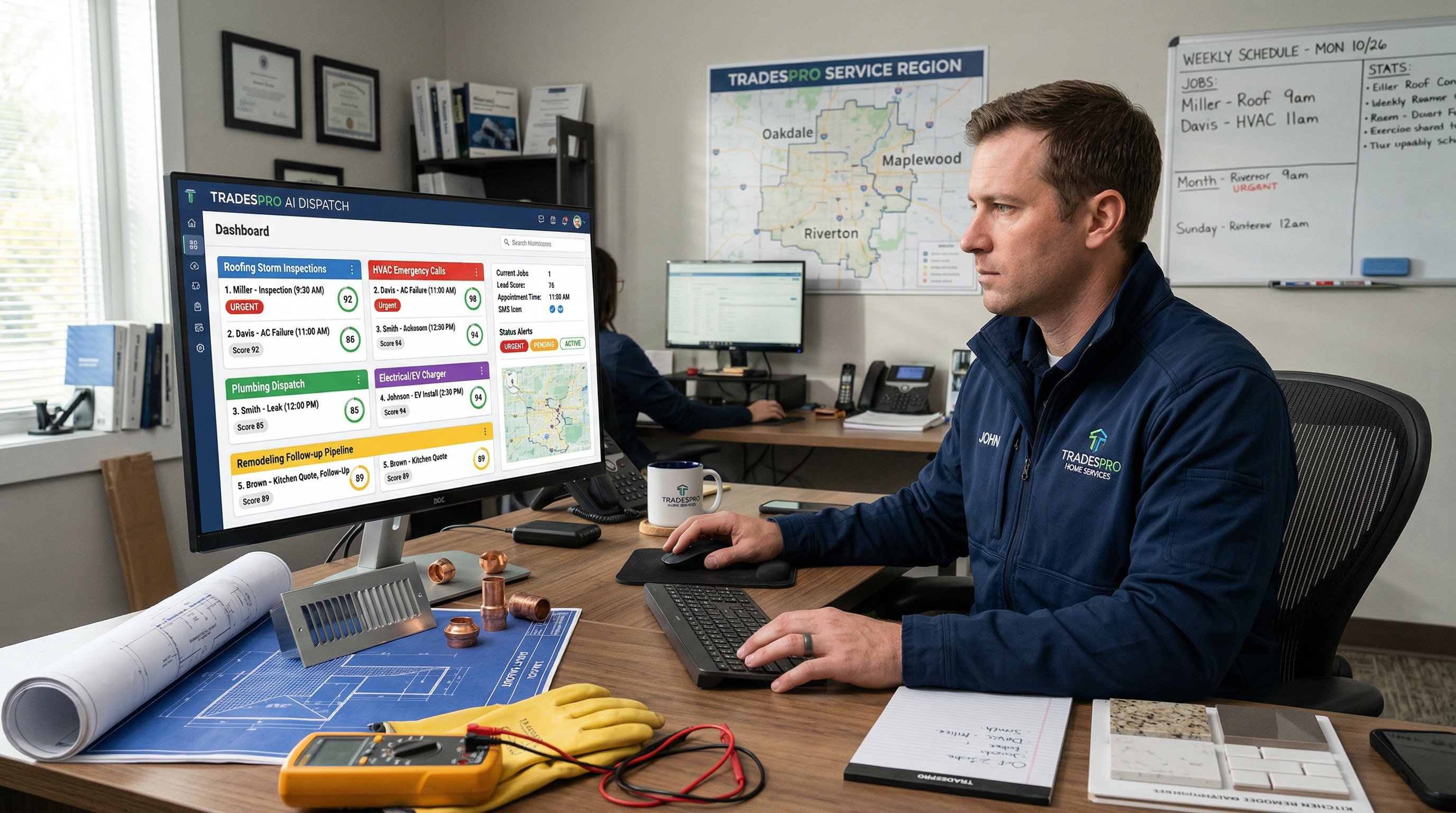
The strongest AI use cases depend on the trade.
Roofing: AI can tag storm-related leads, prioritize emergency inspections, and support local search visibility so we show up first after high winds or heavy snow. It also helps automate inspection scheduling and estimate follow-up.
HVAC: Great for emergency capture, replacement lead scoring, and after-hours response. If a unit fails at 9 p.m., instant booking and SMS follow-up can save the lead before a competitor answers.
Plumbing: AI works well for triaging emergencies versus larger opportunities like sewer, repipe, or water heater replacement. It's useful for dispatch, too.
Electrical: Panel upgrades, EV chargers, and generator installs often need homeowner education. AI can draft explanations, financing follow-ups, and appointment reminders.
Remodeling: Longer sales cycles benefit from AI-powered nurture. Basements, kitchens, additions, concrete, landscaping, and solar projects all involve more research, more touchpoints, and more no-decisions. Consistent follow-up helps.
In every case, the best results come when AI supports a focused local strategy aimed at high-margin jobs, not just more volume.
Common AI Mistakes Contractors Should Avoid
The biggest mistake is chasing tools before fixing the process. If leads aren't routed correctly, estimates take a week, or nobody owns follow-up, AI won't save us. It just automates confusion.
Other common mistakes:
- Using generic prompts and scripts that sound robotic
- Responding fast but poorly with messages that don't answer the homeowner's actual question
- Automating everything instead of handing off at the right moment
- Ignoring local context like zip codes, weather patterns, HOA rules, or market-specific buying behavior
- Measuring vanity metrics such as clicks instead of booked estimates and closed revenue
We should also avoid relying on AI to create a fake brand voice. Home service marketing still comes down to credibility. Exclusive leads, strong reviews, clean job photos, and fast real-world follow-up beat clever automation every time.
The smart approach is boring, honestly: pick one or two bottlenecks, improve them, track close rates, and build from there.
Conclusion
AI for contractors is valuable when it helps us do the basics better: answer faster, qualify smarter, follow up consistently, and keep schedules tight. That's how we win more of the right jobs without adding waste. In 2026, the contractors who use AI well won't look more robotic. They'll look more responsive, more organized, and a lot harder to beat.